Musk is the most common note in this catalogue: 2,643 of the 6,148 fragrances here list it, ahead of bergamot at 2,269 and vanilla at 2,162. And the thing the word originally referred to — a secretion from the gland of a male musk deer — has been effectively unavailable to mainstream perfumery for decades. That gap between the word and the material is the whole story. "Musk" on a note list isn't an ingredient. It's a category covering three generations of chemistry that smell noticeably different from each other, and the label never tells you which.
The animal at the bottom of the word
Real musk comes from Moschus moschiferus and its relatives — small, tusked, deer-like animals of the Himalayas, Siberia and the mountain forests of central Asia. Only mature males produce it, in a pod-like gland used to signal to females. Raw, it's genuinely unpleasant: sharp, fecal, ammoniac. Tinctured and diluted far down it becomes something else — warm, powdery, faintly sweet and skin-like, with a fixative power that makes everything around it last longer.
The economics were brutal. Each pod yields roughly 25 grams and the animal has to be killed to take it, so a kilogram meant on the order of forty adult males — more in practice, since snare trapping killed females and juveniles indiscriminately. Traded prices have historically been quoted at several times gold by weight.
Why it isn't on the shelf anymore
Musk deer came under CITES protection in 1979. The populations of Afghanistan, Bhutan, India, Myanmar, Nepal and Pakistan went into Appendix I, closing commercial international trade in wild-sourced specimens outright; the rest sit in Appendix II under permit control. It's more accurate to say the trade was shut down than that the note was banned outright — but between legal exposure, ethics and cost, Western fine fragrance had already walked away.
The catalogue shows how complete that exit was. This site files deer musk as its own note, under animalic rather than musky — and exactly two records out of 6,148 list it: Areej Le Doré's Malik Al Taif at $220 for 50ml, and Hind Al Oud's Musk Al Shiokh at $210. Two records, against 2,643 for plain "musk."
Areej Le Doré engages with this most directly. Siberian Musk, from perfumer Russian Adam and one of the label's 2017 debuts, opens on pine and citrus over a chypre-leaning heart of cypress, galbanum and orange blossom, settling into a natural-musk-and-oud base. It's $195 for 50ml and made in small batches, because independents can work with legally obtained and vintage naturals in quantities no global brand could.
Siberian Musk
Areej Le Doré · Parfum / Extrait · Woody
≈ $195 · 50ml
Generation one: an accident in an explosives lab
The replacement arrived a century before the ban, by mistake. In 1888 the chemist Albert Baur was working on nitrated toluene compounds — the family TNT belongs to — hoping for a better explosive. What he got was a stable, non-explosive solid that smelled distinctly musky. He patented it. Musk xylene followed in 1891, then musk ketone and musk ambrette, and these nitro musks anchored the industry for fifty years. They were also the first generation retired on safety grounds — musk ambrette over photosensitisation and neurotoxicity concerns, musk xylene and ketone over persistence and bioaccumulation.
Generation two: the laundry molecule
Polycyclic musks — Galaxolide, Tonalide and relatives, from the 1950s and 60s onward — replaced them, and this generation rewired what most people mean by the word. Galaxolide is cheap and stable enough that it became the default not just in perfume but in detergent, fabric softener, shampoo and soap, at volumes fine fragrance never approaches. That matters more than any perfumery decision: most people alive today met synthetic musk on a towel, not on skin.
They are now under regulatory pressure for the reason nitro musks were: they biodegrade poorly, accumulate in fatty tissue, and have been found in human blood and breast milk.
Generation three: the chemistry that took a Nobel Prize
The best modern musks are macrocyclic — Exaltolide, Habanolide, Muscenone, ethylene brassylate — and they exist because of structural chemistry that was heretical when published. In 1926 Leopold Ružička proved that muscone, the molecule behind real deer musk, is a fifteen-membered carbon ring, and civetone a seventeen-membered one. Chemists then broadly accepted von Baeyer's position that rings above about eight atoms were too strained to exist. Ružička demolished that, opened large-ring chemistry as a field, and took a Nobel Prize in 1939 partly on the strength of it.
Macrocyclics get closest to the natural material — rounder, warmer, more skin-like, less soapy — and they cost more, which is why they cluster at the top of the market. Perfumers almost never name them: muscone appears as an explicit note in only three catalogue records, two of them from Escentric Molecules, the one brand built on naming its molecules.
Musk doesn't smell clean because it's clean. Clean smells like musk.
What "white musk" actually means
White musk is filed as a separate note here — 452 records carry it — but it isn't a material. It's consumer shorthand for a blend of clean, laundry-adjacent synthetics with the animalic facets engineered out. Juliette Has A Gun's Musc Invisible is the textbook case at $68: jasmine on top, cotton flower in the heart, white musk in the base. Cotton flower isn't a real botanical either — there is no cotton absolute — it's an accord built to smell like fresh fabric. Two of its three notes are ideas rather than ingredients.
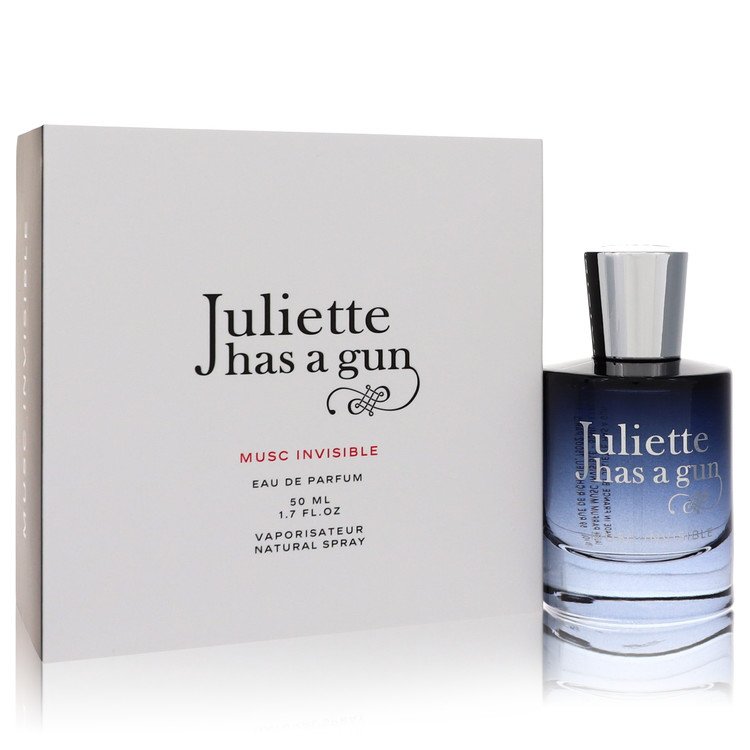
Musc Invisible
Juliette Has a Gun · Eau de Parfum (EDP) · Floral
≈ $68 · 1.7oz
The same effect costs far less elsewhere. Lattafa's Musk Mood runs $19 and puts white musk in both heart and base, citrus above and vanilla-and-sandalwood softness below — a reminder that clean musk is one of the few registers where spending more buys refinement rather than a different smell.
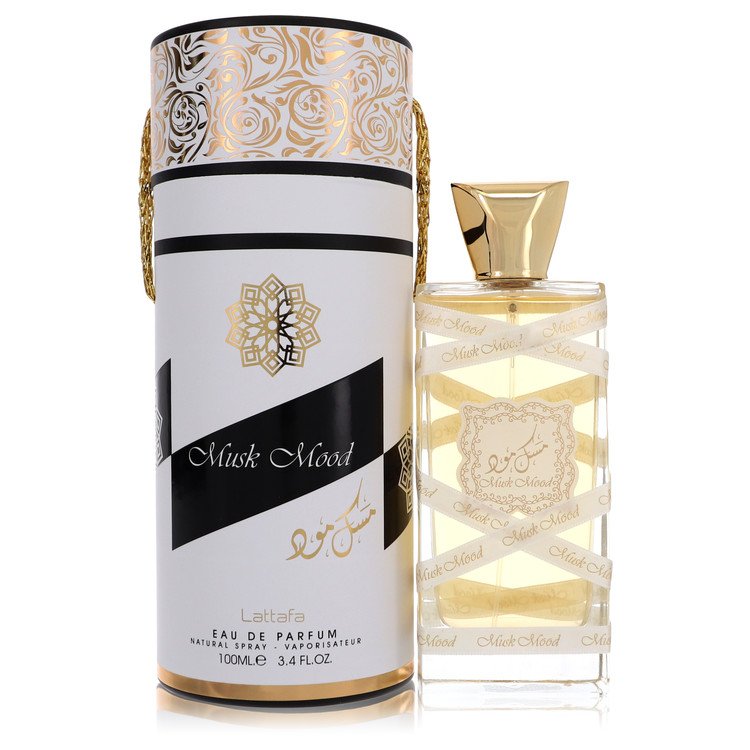
Lattafa Musk Mood
Lattafa Perfumes · Eau de Parfum (EDP) · Amber
≈ $19
The laundry framing is also a Western one. In the Gulf, white musk arrived through another door: musk tahara, the "musk of purity," a non-alcoholic oil traditionally worn before prayer and long a domestic staple rather than a counter product. Surrati's Musk Al Tahara — $15 for 100ml of oil — is the standard version: soap-clean, creamy, faintly floral. Same molecules, completely different cultural meaning.
Musk Al Tahara
Surrati · Attar / Oil · Amber
≈ $15 · 100ml
Skin musk, and musk as the subject
The other modern register is skin musk: warm, powdery, low-projection, built to read as though it comes off the wearer rather than out of a bottle. Narciso Rodriguez For Her is the reference point. Christine Nagel and Francis Kurkdjian made musk and amber the entire heart, orange blossom and osmanthus barely sketched above. At $100 it taught an enormous audience that musk could be the subject of a fragrance rather than the glue holding one together.
For Her
Narciso Rodriguez · Eau de Parfum (EDP) · Amber
≈ $100 · 3.3oz
The house later pushed that to its limit: Pure Musc, from Sonia Constant in 2019, lists musk as its single top note and cashmeran as its single base note. Cashmeran is instructive too — a synthetic musky-woody molecule in 318 catalogue records, which this taxonomy files as woody rather than musky. The line between "musk" and "soft synthetic wood" is genuinely blurry.
At the opposite temperature sits Frédéric Malle's Musc Ravageur, Maurice Roucel's 2000 composition and still the best argument that a synthetic musk can be filthy. Lavender, tangerine and coriander open it; cinnamon, clove, iris and rose fill the heart; musk, vanilla, tonka and amber hold the base. Nothing in it is animal. The ravaging comes from dosage and from what the musk sits beside — sweetness and warm spice pushing a clean molecule into something that reads as skin and body heat. Animalic is a compositional effect, not an ingredient.
Musc Ravageur
Frédéric Malle · Eau de Parfum (EDP) · Amber
≈ $320 · 100ml
Black musk isn't black, and frequently isn't musk
Black musk turns up constantly in Middle Eastern marketing, and it's the term most likely to mislead. It isn't a material, a colour or a grade — it's a descriptor for a dark, warm, sweet-smoky accord that leans animalic instead of soapy, sold as white musk's opposite. As a listed note it's rare: six records in the whole catalogue against 452 for white musk. Abdul Samad Al Qurashi's Black Deer Musk is the traditional format — a $70 attar in a 3ml bottle, animalic on application, lasting days on fabric. Note the name against the note list: there's no deer musk in it.
Black Deer Musk
Abdul Samad Al Qurashi · Attar / Oil · Amber
≈ $70 · 3ml
The naming gets looser still. Al Haramain's Black Musk, at $38, doesn't list black musk at all — it's lavender, saffron and nutmeg over oud, closing on patchouli and ordinary musk. And of the six records that do carry the note, three share one note list: Bvlgari's Le Gemme Falkar, a $250 Jacques Cavallier Belletrud composition of nutmeg and cinnamon over cypriol and frankincense with oud, black musk and saffron beneath — plus Fragrance World's Bavaria The Gemstone Hawk at $20 and Paris Corner's Emir Cosmopolitan Dubai at $25, on the same seven notes. Half the catalogue's black musk is one composition in three labels.
Le Gemme Falkar
Bvlgari · Eau de Parfum (EDP) · Woody
≈ $250 · 100ml
The honest summary
No other note has drifted this far from its own name. Musk began as a wild animal product so destructive its trade had to be shut down, was replaced by a byproduct of explosives research, then by a detergent additive that redefined what "clean" smells like, then by molecules whose existence required overturning a settled principle of ring chemistry. Each generation solved the last one's problem and made a new one, and the label never changed.
So stop reading "musk" as information and read the company it keeps. Musk plus cotton flower and jasmine is laundry. Musk plus amber, vanilla and patchouli is skin. Musk plus oud, saffron and frankincense is the dark Gulf accord that gets called black. And musk beside a natural-materials house at a three-figure price might still, very occasionally, be the animal — but here that's two records out of 6,148. Everything else is chemistry doing an impression.