The base notes of a fragrance called Greenbriar 1968 are dirt, axle grease and cotton. That is not a typo or a joke. It's the intended structure of a $75 perfume, and it is doing exactly what its maker wanted: reconstructing the smell of his grandfather's sawmill, work gloves and machine oil included. Above that base sit sawdust, cut hay, worn leather gloves and pipe tobacco. Nobody involved was aiming for a compliment.
An entire wing of niche perfumery operates like this, and mainstream coverage mostly treats it as a novelty sideshow — the weird stuff, good for a listicle. That framing gets it backwards. These houses aren't failing to make something pleasant. They're not trying to, and understanding why is the difference between hearing a bad joke and hearing an argument.
The house named after a complaint
CB I Hate Perfume is the Brooklyn atelier of Christopher Brosius, who co-founded Demeter Fragrance Library in 1992 and left in July 2004 to work alone. The name comes from his initials and from a manifesto he wrote rejecting conventional perfumery — the industry's habit of selling the same handful of pretty abstractions in different bottles. Everything is composed and bottled in-house, sold as highly concentrated absolutes or alcohol-free water perfumes, and Brosius is the sole nose behind all 28 of his compositions in our catalogue.
His method is to build scents around a specific memory or place rather than a traditional accord structure, and the note lists say so plainly. At The Beach 1966 opens on a suntan-lotion note modelled on a particular vintage of Coppertone, over wet sand, seashell and sea salt, closing on driftwood and sun-baked boardwalk. Winter 1972 is new-fallen snow, frost, cold air and woollen mittens over frozen forest and sleeping earth. Burning Leaves is the smoke of burning maple leaves and essentially nothing else. Notice that none of these are ingredients. They are images, and the perfume is the attempt to build one.
Greenbriar 1968
CB I Hate Perfume · Extrait Oil · Woody
≈ $75 · 100ml
The house's best-known scent, In the Library, proves the approach can produce something genuinely lovely as well as conceptually clean. Its top notes are old books, English novel and paper; its heart is Russian and Moroccan leather bindings; its base is worn cloth and a trace of wood polish. It is warm, dry and completely wearable — not because Brosius softened his idea into something commercial, but because a room full of ageing paper and leather bindings happens to be a beautiful smell, and he pursued the specific thing rather than a generic "woody-leather" gesture at it.
In the Library
CB I Hate Perfume · Extrait Oil · Woody
≈ $75 · 100ml
Anti-perfume has a birth year
The idea didn't start in Brooklyn. In 1998, Rei Kawakubo commissioned IFF to build something for Comme des Garçons that deliberately contained no florals at all. The result, Odeur 53, is assembled from 53 abstract synthetic accords standing in for smells that had never been considered perfume material: oxygen, burnt rubber and metallic notes on top; nail polish, cellulose and sand in the heart; mountain air, carbon and laundry dried in the wind at the base. It is widely treated as the first true anti-perfume — a composition that discards the top-heart-base floral logic on purpose rather than by accident, and it still sells for $100.
Odeur 53
Comme des Garçons · Eau de Toilette (EDT) · Fresh
≈ $100 · 50ml
What Kawakubo was doing is recognisable from any other art form. A house that had spent years arguing clothes need not flatter the body applied the same logic to scent: perfume need not flatter the wearer. It could instead be a proposition about what a smell is allowed to be — and if you find it cold and strange, the piece has partly succeeded.
Why conceptual perfume works the way conceptual art works
Most perfume is decorative: designed to make the wearer more appealing in a room, and judged on that measure — a perfectly respectable thing for an object to do. Conceptual perfumery swaps the criterion. It asks whether an idea has been executed precisely, whether the smell is the specific thing it claims to be, and whether encountering it changes how you notice the world. "Do you like it" is about as useful a question here as it is in front of a gallery piece that is deliberately hard to look at.
The question isn't whether it smells nice. It's whether it smells like something.
It's also why the note lists in this genre look so odd from outside. Building an encyclopedia on a controlled vocabulary means our own taxonomy carries entries for axle grease, boardwalk, goat fur, sleeping earth, soil tincture and laundry dried in the wind — accords describing an industrial or domestic memory rather than a raw material a distiller could sell you. The vocabulary expanded because the work demanded it.
Slumberhouse and the unorthodox palette
Josh Lobb's Slumberhouse, a self-taught operation working out of Portland and the northern Oregon coast, takes a different route to the same territory: instead of building memories, it builds density out of materials nobody else reaches for. Sibet is a dusty, dry floral-leather with a waxy orris heart, carnation and ash — and a base of moss, labdanum and goat fur. Sova stacks hops and poplar buds over hay, sweet clover and black locust, resting on beeswax and castoreum. Both run $180 for 30ml, and both are more accurately described as thick than as pretty.
Sibet
Slumberhouse · Parfum / Extrait · Woody
≈ $180 · 30ml
The house's more famous releases — the boozy fruited tobacco of Kiste, the honeyed straw and parchment of Baque — are easier to like. But Sova, widely regarded by devotees as the hardest entry in the line, is the honest one about what the project actually is, and Slumberhouse's cult following exists precisely because the house never sanded that off.
The provocateurs are a different thing again
Not everything in this corner is quiet and studious. Etat Libre d'Orange built a whole house on discomfort, and its 2006 release Secretions Magnifiques, composed by Antoine Lie, is the most notorious example in modern perfumery: aldehydes and coconut over iris and milk, with sandalwood, opoponax and seaweed underneath, tuned into a metallic, salty, milky accord meant to evoke bodily fluids. It is designed to unsettle rather than seduce, and by every account it succeeds completely. It costs $80, and the honest advice is to smell it on paper before you smell it on skin.
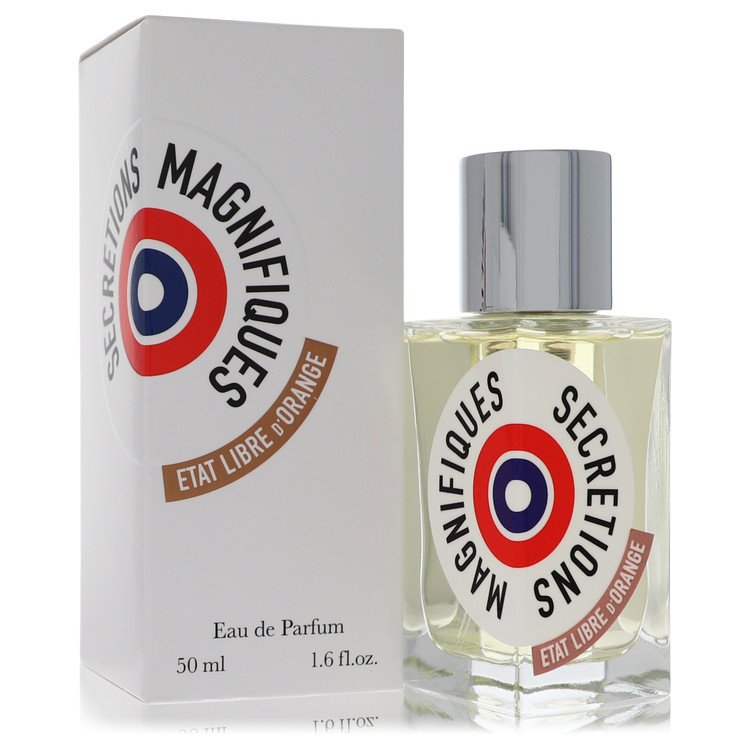
Secretions Magnifiques
Etat Libre d'Orange · Eau de Parfum (EDP) · Woody
≈ $80 · 1.6oz
The same house also made Attaquer le Soleil, a stark study of cistus labdanum with almost nothing else in it, plus a popcorn-and-gunpowder scent and one built from upcycled fragrance waste. Alessandro Gualtieri works the same register from Italy under two labels. Orto Parisi's Stercus is named to leave no doubt about its intentions: bitter almond and anise open onto a dirty musk, with oud, leather and heliotrope building something skin-like that some wearers find genuinely comforting and others cannot get off their arm fast enough. His Nasomatto flagship, Black Afgano, layers hashish-like green notes, saffron and davana over tobacco, coffee and a heavy oud-incense base — an intensity that reads as a statement more than a fragrance.

Stercus
Orto Parisi · Parfum / Extrait · Woody
≈ $195 · 50ml

Black Afgano
Nasomatto · Parfum / Extrait · Woody
≈ $190 · 30ml
It's worth separating these two impulses honestly, because they're often lumped together. Brosius and Lobb are chasing accuracy — the smell of a real place, or the texture of an unusual material. Gualtieri and Etat Libre are chasing reaction. Both are legitimate, but only the first reliably produces something you'd want to wear for eight hours. Provocation is a good reason to make a perfume and a shaky reason to buy one.
The middle ground: storytelling without the shock
Between the pleasant and the confrontational sits a group of houses using unconventional notes for narrative rather than provocation. Imaginary Authors builds each release around a fictional book; The Cobra and the Canary runs lemon and hay over iris and tobacco flower into a base of leather and asphalt, and the hot-tarmac facet is what makes the road-trip idea land. Zoologist gives each perfumer an animal; Ellen Covey's Bat opens on a soil tincture and overripe banana to conjure the damp mineral air of a cave. These are strange on paper and legible on skin — the friendliest door into the genre.
The Cobra and the Canary
Imaginary Authors · Eau de Parfum (EDP) · Woody
≈ $140 · 50ml
Bat
Zoologist · Parfum / Extrait · Woody
≈ $135 · 60ml
Who this is actually for
It is not for everyone, and pretending otherwise does the genre no favours. If you want a fragrance that makes you smell attractive at work, this is the wrong aisle and a well-made designer release will serve you better for less. Several of these read as unpleasant to people standing near you, by design. There is also real self-indulgence in the category — houses where the concept is a press release and the liquid is thin — and the price tags rarely reflect the difference.
But if you've ever found mainstream perfume boring in a way you couldn't articulate, this is probably why: most of it is competing on pleasantness, a narrow axis, and once you've smelled forty variations you've smelled the argument. Conceptual perfumery competes on specificity instead. It's for people who want a smell to be about something, who'd rather own one bottle that captures a sawmill in 1968 than three that capture a focus group in 2024, and who are willing to be occasionally repelled as the cost of occasionally being astonished.
The practical advice is the same as for oud: sample, don't buy. Decants of nearly all of this exist, and $10 on a sample of Secretions Magnifiques will teach you more about your own limits than any review. Start somewhere legible — In the Library, or Bat — and work outward once you've calibrated. And when something does smell wrong, sit with it before dismissing it. Wrong is sometimes the whole point, and a far more interesting reaction than pleasant.