Saffron is the note most people have smelled hundreds of times without ever being able to name it. It appears in 561 fragrances in this catalogue, and the way that number splits is the interesting part: 267 come from Middle Eastern houses, 197 from Western niche brands, 97 from designers. No other spice in the palette is that evenly shared between two traditions that otherwise have very little in common. A Dubai attar oil and a Paris niche extrait will disagree about everything — concentration, price, structure, who it's for — and then both open on saffron.
The reason is that saffron does a job nothing else does as cleanly, and it isn't the job most people assume. It's not a warm, golden, cosy spice. It's closer to leather.
The most expensive spice on earth, by a long way
Saffron comes from Crocus sativus, an autumn-flowering crocus, and specifically from the three crimson stigmas at the centre of each bloom — the female part that catches pollen. That's it. Three thread-thin filaments per flower, pulled out by hand, one flower at a time, ideally in the early morning before the day's heat degrades them. There is no mechanised version of this step anywhere in the industry, because nobody has built a machine that can pick a stigma out of a flower without ruining it.
The arithmetic that follows is brutal: roughly 150 flowers for a single gram of dried saffron, meaning something like 150,000 hand-picked blooms per kilogram, all harvested inside a flowering window of a couple of weeks. Retail prices are routinely quoted in the thousands of dollars per kilogram — the figure moves with harvest and grade, but the order of magnitude makes saffron the most expensive spice in the world by weight, ahead of vanilla. Iran grows the overwhelming majority of the crop, with Kashmir, Spain, Greece and Morocco supplying the rest — a geography worth noting, because it puts the material's source inside the same regions where the Middle Eastern perfume tradition developed.
What saffron actually smells like
Here is where most descriptions go wrong. Marketing copy calls saffron warm, golden and precious, which tells you about the price rather than the smell. What saffron actually smells like is dry, leathery and slightly strange. Its dominant aroma compound is safranal, and it carries a hay-like, faintly medicinal character — a whiff of iodine, or of a plaster cabinet — sitting right under a warm spiciness. There's a metallic edge too, and a suede-like, almost animalic softness that becomes obvious the moment you smell it beside a real leather note.
That combination is the whole reason perfumers reach for it. Saffron isn't a spice note in the way cinnamon or clove are; it's a leather note that arrives with spice attached, bridging a bright opening and a dark, tanned base without needing anything in between. Put it next to a fruit and the fruit turns bloody. Put it next to a rose and the rose loses its prettiness and gains a metallic sharpness. Put it in a base and it reads as suede.
Saffron isn't a spice note with a leather facet. It's a leather note dressed as a spice.
Almost none of it is saffron
Given the price, the obvious question is how a $20 bottle lists saffron in its top notes at all. It mostly doesn't. Real saffron absolute exists and gets used at the very top of the market, but the great majority of what smells like saffron in a modern fragrance is a reconstruction — an accord built from synthetics, with a molecule called safraleine doing most of the heavy lifting. Safraleine is sold to the industry as exactly what it is: a saffron-leather material, warm and spicy with a suede texture and a dried-fruit facet underneath. It isn't so much an imitation of saffron as a purified, exaggerated version of its two most useful facets, with the vegetal and bitter parts stripped out.
The telling detail is how invisible this is. Of the 561 saffron fragrances in the catalogue, exactly one names safraleine on its pyramid — Marc-Antoine Barrois's Ganymède Extrait, where Quentin Bisch pairs it with akigalawood, incense and an overdose of immortelle to push the original's mineral, leathery signature somewhere warmer and more resinous. Everything else just says saffron. That's convention rather than dishonesty; a pyramid describes an effect, not a bill of materials. But when you smell a sharp, suede-like saffron in an affordable fragrance, you are almost certainly smelling a lab molecule doing a more consistent impression of saffron than saffron would manage at that dose.

Ganymede Extrait
Marc-Antoine Barrois · Parfum / Extrait · Amber
≈ $340 · 100ml
The Western use: saffron as leather's opening act
Western perfumery found saffron mainly through leather, and Tom Ford's Tuscan Leather made the case. Harry Fremont and Jacques Cavallier built it in 2007 around raw suede and leather, and what everyone remembers is the top: raspberry and saffron together, reading as unnervingly bloody rather than fruity. Saffron is what makes the trick work — it drags the raspberry toward something metallic and skin-like, so the descent into the leather base feels continuous instead of abrupt. Nearly two decades on it's still the reference for modern leather, and the saffron is the hinge it turns on.
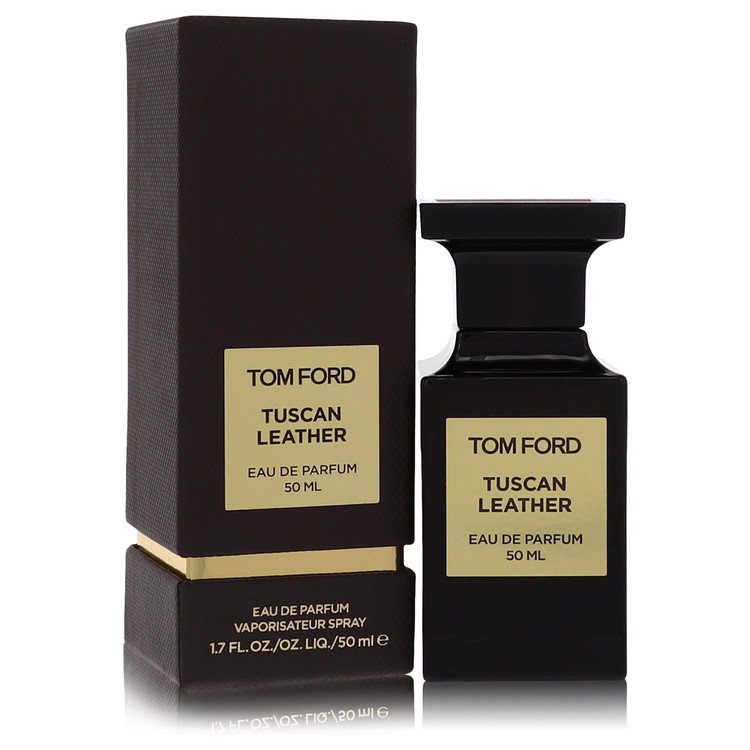
Tuscan Leather
Tom Ford · Eau de Parfum (EDP) · Woody
≈ $244 · 1.7oz
Nishane's Suede et Safran strips the same idea to its essentials. Jorge Lee's 2015 extrait has six notes — saffron and ambrette, suede and ginger, musk and leather — and does nothing else, which makes it one of the most useful fragrances to smell if you want the note with no fruit or oud to hide behind. Nishane being an Istanbul house is quietly appropriate: Turkey sits between the two traditions saffron belongs to. Byredo's Black Saffron takes the more stylised route — saffron and pomelo over black violet, leather and rose — and won the Fragrance Foundation's Perfume Extraordinaire prize in 2013.
Suede et Safran
Nishane · Parfum / Extrait · Woody
≈ $245 · 100ml
The Gulf use: saffron, rose and oud
In Middle Eastern perfumery saffron has an older, more codified role. The classic mukhallat — the blended oil that predates Western-style alcoholic perfume in the region by centuries — is built from a small set of materials, and saffron is one of them, alongside rose, oud and sandalwood. It isn't a top note in the Western sense so much as the spice that lifts an otherwise very heavy accord: oud is dense and animalic, sandalwood creamy and slow, and saffron cuts through both.
Swiss Arabian's Mukhalat Malaki, from the Dubai house founded in 1974, is the traditional build at concentrated-oil strength — Turkish damask rose and Spanish saffron over Cambodian-style oud, landing on sandalwood, amber and musk. It's one of the house's strongest oils, and it's the structure hundreds of Gulf releases are variations on.
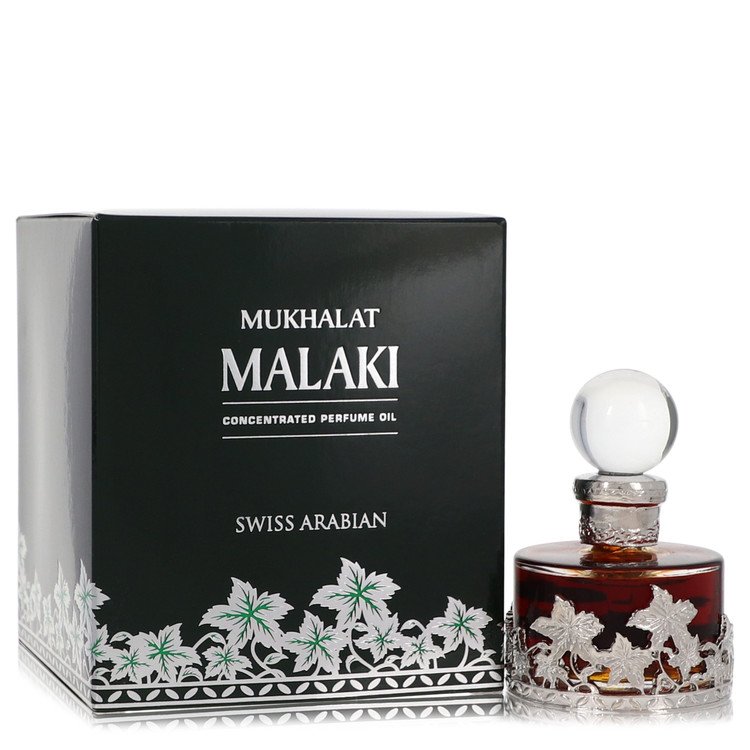
Mukhalat Malaki
Swiss Arabian · Attar / Oil · Woody
≈ $55 · 1oz
The same accord scales all the way down. Adil Qadri's Zafar Royal — from the Gujarat attar house that became a household name in India after Shark Tank — is a four-note oil: saffron and incense over oud and rose, nothing else, at $9 for 10ml. Zafar is simply the Arabic-derived word for saffron, and the fragrance is the whole tradition compressed into its load-bearing materials. Smelling it beside a $200 Western saffron leather is genuinely instructive, because it shows the two traditions aren't using the note differently so much as arriving at it from opposite directions.
Zafar Royal
Adil Qadri · Attar / Oil · Woody
≈ $9 · 10ml
Amouage sits exactly on the seam. Epic Man, Randa Hammami's 2009 composition for the Omani house, was built around the Silk Road and behaves like it — pink pepper, frankincense, saffron, nutmeg and cardamom, then myrrh and geranium, then incense, oud, leather, castoreum and patchouli. That's a Gulf structure executed with Western niche technique, priced at $375, and saffron is what lets the spicy opening and the animalic base read as one continuous thing rather than two ideas stapled together.
Epic Man
Amouage · Eau de Parfum (EDP) · Woody
≈ $375 · 100ml
Where the two worlds actually meet
The clearest evidence saffron now belongs to both traditions is that the most commercially significant saffron fragrance of the last decade is Western, and its most successful imitators are not. Francis Kurkdjian's Baccarat Rouge 540 has a six-note pyramid — saffron and jasmine, amberwood and ambergris, fir resin and cedar — and the saffron does something unusual in it. Rather than pointing toward leather, it supplies a sharp, slightly medicinal brightness that stops the amber accord collapsing into sweetness and gives the whole thing its glassy radiance. At $400 it also became the most copied fragrance of its era.
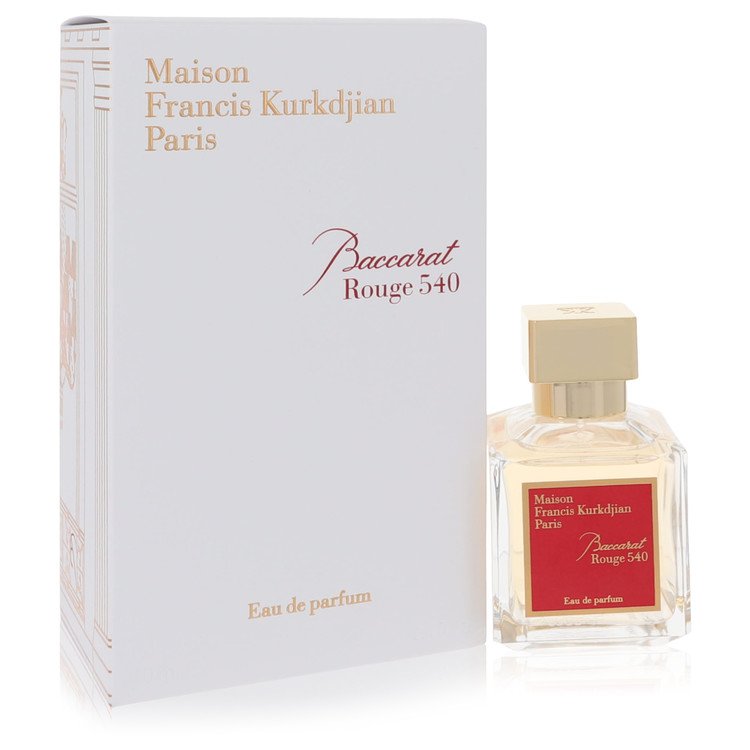
Baccarat Rouge 540
Maison Francis Kurkdjian · Eau de Parfum (EDP) · Amber
≈ $400 · 2.4oz
Armaf's Club de Nuit Untold lists the identical six notes at $76. The pattern repeats a tier down: Initio's Oud for Greatness is saffron, nutmeg and lavender over oud, patchouli and musk at $290, and Lattafa's Bade'e Al Oud Oud for Glory is saffron, nutmeg and lavender over oud, patchouli and musk at $25. Those aren't similar pyramids — they're the same three top notes in the same order. Middle Eastern houses reverse-engineering Western saffron compositions, using a note their own tradition worked with far longer, and selling it back at a tenth of the price is one of the more quietly ironic dynamics in contemporary perfumery.
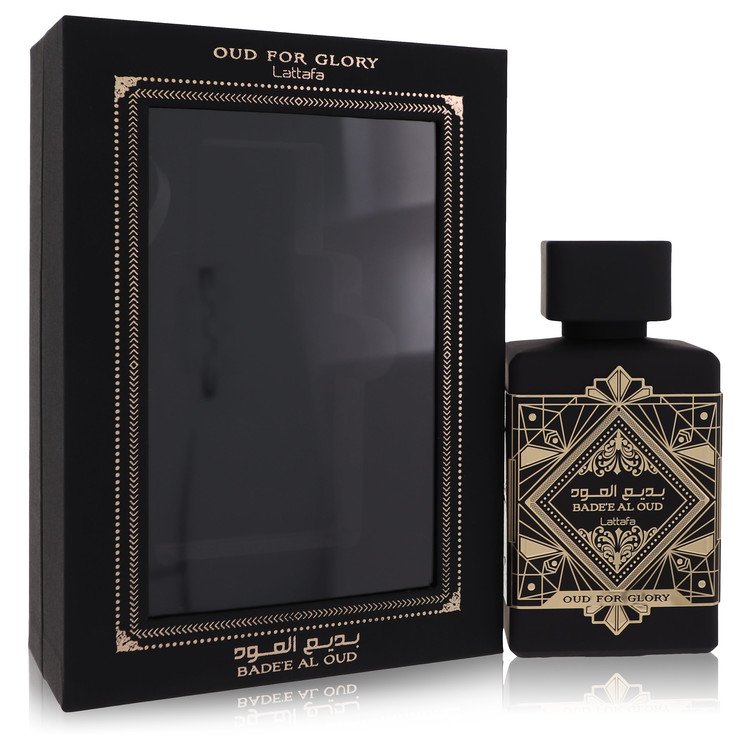
Bade'e Al Oud Oud for Glory
Lattafa Perfumes · Eau de Parfum (EDP) · Woody
≈ $25 · 3.4oz
The honest summary
Saffron earns its price in the kitchen for reasons that have almost nothing to do with why perfumery wants it. Cooking wants the colour and the bitter-sweet flavour; perfumery wants safranal's dry, leathery, faintly medicinal edge — and gets it more reliably from a synthetic than from 150,000 hand-picked flowers. What's remarkable isn't that the note is expensive; plenty of naturals are. It's that saffron is the rare material both traditions independently decided was essential. The Gulf has used it with rose and oud for centuries; the West arrived at it through leather about twenty years ago. Both were reaching for the same thing: a note that smells warm and sharp and slightly wrong, in exactly the way that makes a fragrance hard to stop smelling.