Every fragrance page you'll find here — and on every other perfume site — breaks its notes into top, heart and base. It looks like a recipe: three neat tiers, read top to bottom, as if the perfumer built the scent in layers like a cake. That's not quite what's happening. The pyramid describes volatility, not importance or sequence of construction, and once you understand that one fact, the whole thing gets much more useful and much less mysterious.
This is the piece we'd want a beginner to read before anything else on the site. It covers what the tiers actually mean, how long each genuinely lasts on skin, why published pyramids are often closer to marketing copy than lab disclosure, why a note on a list doesn't guarantee the raw material is in the bottle, and how to use all of this to predict whether something will suit you before you buy it.
What the pyramid actually describes
Every ingredient in a fragrance has a different molecular weight, and weight determines how fast it evaporates off warm skin. Small, light molecules — citrus oils, light aldehydes — fly off almost immediately, which is why they're "top" notes: first to arrive, first to leave. Mid-weight molecules like florals and spices take longer to release, forming the "heart." Heavy, complex molecules — woods, resins, musks, ambers — barely evaporate at all, which is exactly why they're the last thing you smell and why they're called the "base." None of this is about which note matters most. A base note isn't more important than a top note; it's just heavier.
Realistic timings, not vibes
Rough numbers worth remembering: top notes typically last 5 to 20 minutes before they thin out noticeably. The heart takes over from roughly 20 minutes to 1–3 hours in. The base is whatever's left after that, and on a well-fixed fragrance it can run for the rest of the day. These aren't hard cutoffs — they blend into each other — but they're accurate enough to plan a test around. A classically structured fragrance makes this easy to feel. Guerlain's 1925 Shalimar is about as textbook as pyramids get.
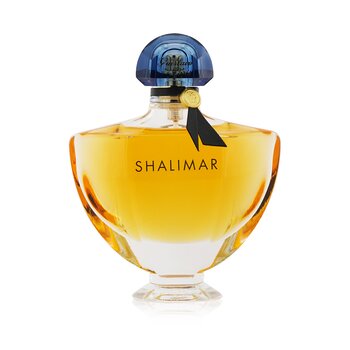
Shalimar
Guerlain · Eau de Parfum (EDP) · Amber
≈ $160 · 90ml
In the first ten minutes you get a genuinely bright flash of bergamot, lemon and mandarin over cedar — sharp, citrus-forward, nothing like the fragrance's reputation. Give it half an hour and that fades into a different scent: iris, jasmine and rose over patchouli and vetiver, softer and more powdery. By the two-hour mark the top and much of the heart have gone, and what's left is the part Shalimar is actually famous for — vanilla, incense and opoponax wrapped in leather, tonka, sandalwood, and a trace of civet and musk. Three fragrances in one bottle, in sequence, which is precisely what the pyramid is meant to describe.
The pyramid is a marketing convention as much as a technical description
Shalimar is a hundred years old and built the way pyramids assume everything is built. A lot of modern perfumery doesn't work that way. Contemporary compositions increasingly lean on a small number of high-impact synthetic molecules that are dosed heavily enough to be present from the first spray to the last hour — which blurs or outright breaks the three-act structure the pyramid implies. Houses still publish a top/heart/base breakdown because buyers expect one and because it's a nice piece of storytelling, even when the fragrance itself doesn't actually move through three distinct phases.
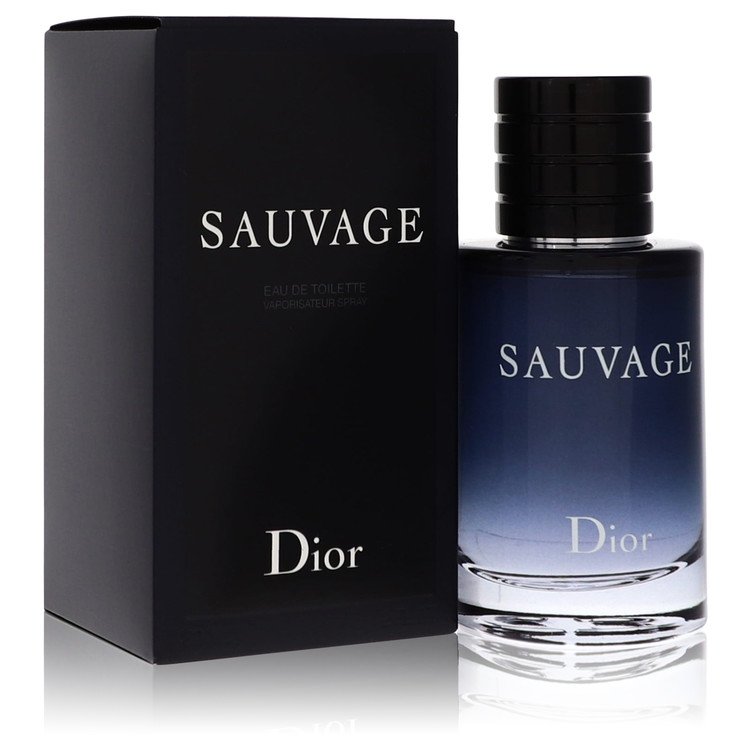
Sauvage
Dior · Eau de Toilette (EDT) · Fresh
≈ $130 · 2oz
Dior's Sauvage EDT is the modern case study. Its published pyramid lists only bergamot and black pepper on top, a crowded heart of Sichuan pepper, lavender, pink pepper, vetiver, patchouli, geranium and elemi, and a base of ambroxan, cedar and labdanum. In practice it doesn't read as three separate movements — the ambroxan is dosed so high it's audible almost immediately and just gets louder as the citrus burns off, giving a scent that feels far more linear than the tiered diagram suggests. That's not a flaw in Sauvage; it's simply how a lot of 2015-onward mainstream perfumery is engineered, and the pyramid format hasn't caught up to describing it well.
A note on the list doesn't mean the material is in the bottle
Plenty of listed notes aren't raw materials at all — they're accords, blends of several other ingredients built to suggest a smell that can't be extracted directly. Gardenia is the standard example: it yields almost no usable essential oil, so "gardenia" on a note list is always a reconstruction from other florals and aroma chemicals, not gardenia itself. The same logic applies to anything endangered, unstable or impossible to distil — real ambergris and old-growth mysore sandalwood are now mostly replaced by synthetics built to approximate them, for cost, consistency and conservation reasons alike.
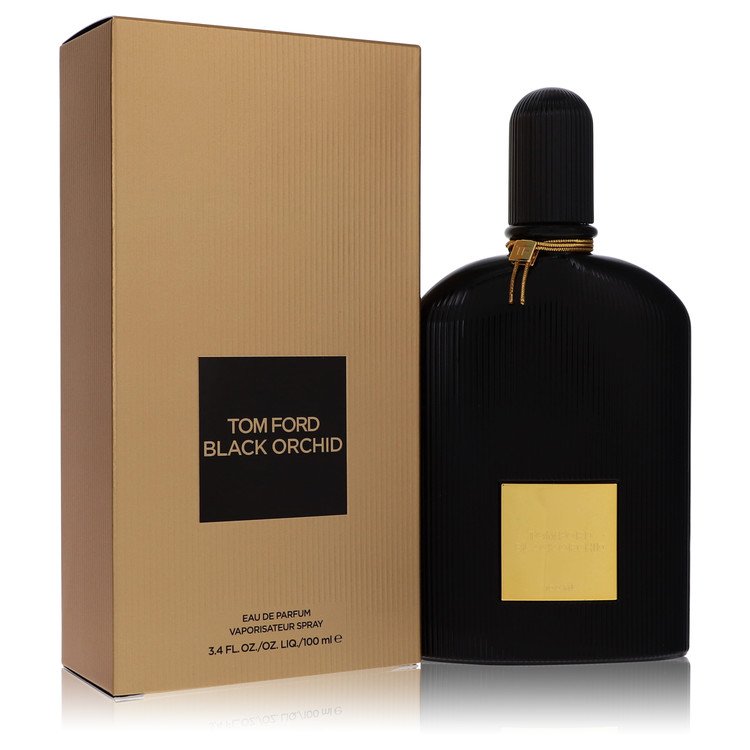
Black Orchid
Tom Ford · Eau de Parfum (EDP) · Amber
≈ $157 · 3.4oz
Tom Ford's Black Orchid makes this obvious just by reading its own note list: truffle, gardenia and lotus at the top, chocolate in the base. None of those are single extractable oils — they're all constructed accords, assembled to be recognisable as "truffle" or "chocolate" to a nose rather than distilled from one. That's not deception, it's just how perfumery has always worked with foods, minerals and flowers that don't yield oil. The honest reading of any note list is "this is the smell impression the perfumer built," not "this exact substance was poured into the vat."
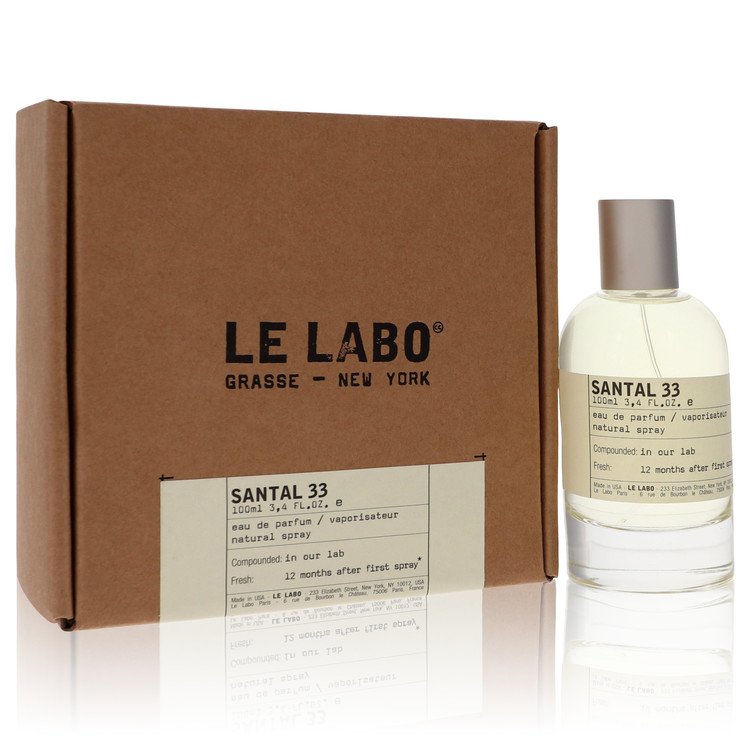
Santal 33
Le Labo · Eau de Parfum (EDP) · Woody
≈ $330 · 3.4oz
Le Labo's Santal 33 pushes the same point from the synthetic side. Its base runs sandalwood, cedar and leather, but the heart is built around ambrox — the trade name for a lab-made amber-woody molecule derived from clary sage, not sandalwood. It's not standing in for a natural anyone's missing; it's simply one of the most widely used aroma chemicals in modern perfumery, prized for being warm, dry and enormously diffusive on its own terms. The published note list for Santal 33 is also unusually short and abstract compared with Shalimar's eighteen notes — a reminder that houses vary hugely in how much of the actual formula they choose to disclose.
A perfume's published pyramid is closer to a wine label's tasting notes than a lab printout — an honest impression, written to sell a story, not a disclosed formula.
How to actually smell a fragrance through its development
Test on skin, not paper. Paper shows you the notes in a vacuum; skin adds heat, oils and your own chemistry, which is what you'll actually be wearing. Spray once, properly — not a token dab — on the inside of a forearm, and then leave it alone. Don't rub your wrists together; that bruises the top notes and speeds up evaporation unevenly. Smell it at the ten-minute mark, then genuinely walk away and come back at 30 minutes and again at two hours. Most people judge a fragrance entirely off the first impression and never find out what it actually settles into.
Reading a note list to predict whether you'll like it — and how long it'll last
The base is the best longevity predictor on any note list. Resins, ambers, musks, woods and oud cling to skin for hours because they're heavy and low-volatility by nature; a fragrance whose base is mostly citrus or green notes will fade fast almost regardless of concentration, because there's nothing heavy left to hold the scent to skin once the light material burns off. For likability, weight the heart and base more than the top — the opening is a five-minute audition, but the heart and base are what you'll actually be wearing for the other eleven hours of the day.
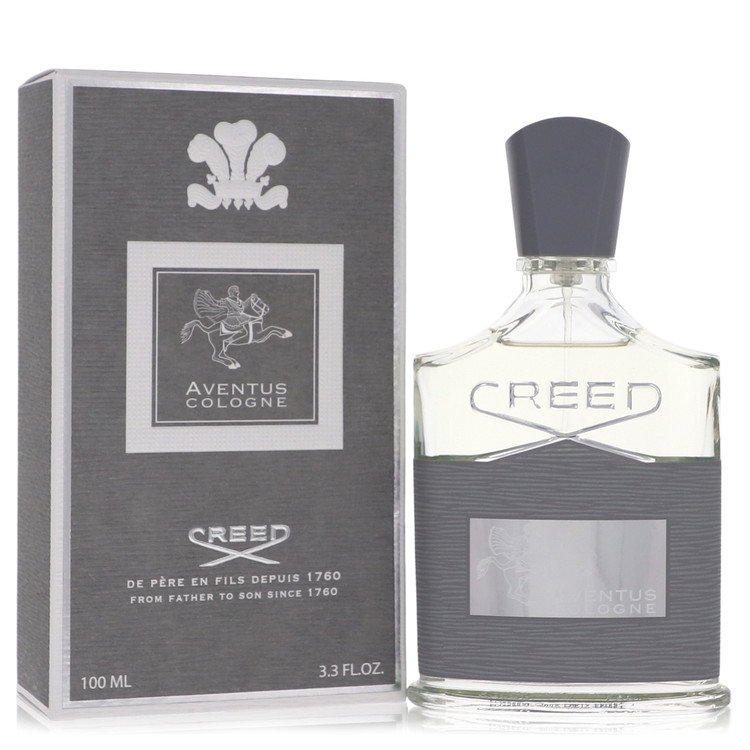
Aventus
Creed · Eau de Parfum (EDP) · Fresh
≈ $378 · 3.3oz
Creed's Aventus is a good worked example. The opening — pineapple, bergamot, blackcurrant, apple — is what made it famous and is gone within the first half hour. What actually gives Aventus its all-day reputation is the base: oakmoss, vanilla, ambergris and musk, all heavy, all low-volatility, all built to fix the lighter material to skin. If you're shopping by note list and longevity matters to you, that base tier is where to look — a fragrance that's all top and no base will smell brilliant for twenty minutes and be gone by lunch.
Use the site's note families to navigate from here
Every note in our taxonomy is filed into a family — citrus, white-floral, woody, resinous-balsamic, musky, sweet-gourmand, spicy, green, animalic and more — so if a description on this page meant something to you, you can click through to that note's own page and see everything else built around it. Liked the incense-and-opoponax base of Shalimar? The resinous-balsamic and smoky-incense families are where to dig next. Drawn to Santal 33's ambrox? Start with the amber family and work outward through the woody notes it's usually paired with.
None of this requires memorising perfumery chemistry. Read the pyramid as a rough timeline rather than a formula, weight the base when you care about longevity, and actually wait the two hours before you decide. That's most of what separates a confident buyer from someone going purely on a first spray in a shop.