Iris is the note perfumery gets backwards most often. People assume it smells like the flower — a purple bloom, soft and floral, sitting somewhere near violet. It doesn't, and it can't, because almost none of the material used in perfume actually comes from the flower at all. It comes from the root. That single fact explains why iris reads as cold and powdery rather than sweet and floral, and why it is quietly one of the most expensive raw materials a perfumer can put in a bottle — more expensive, gram for gram, than most people's idea of a luxury ingredient.
It's not a flower note — it's a root
The iris flower itself is nearly odourless. What perfumers actually use comes from the rhizome — the thick, knuckly underground root — of Iris pallida and Iris germanica, grown mainly in Tuscany and Morocco. That's also why the material has two other names that turn up constantly in older perfumery writing: orris, and the antique English name violet root, coined because the dried, aged rhizome develops a scent that vaguely recalls violets, even though the two plants aren't related. This site's own taxonomy files iris, orris and violet root under one note id — iris — because they're the same material described three different ways across a century of perfume writing.
The absurd six-year production process
Here is the part that actually explains the price. Growers plant iris rhizomes and leave them in the ground for around three years before harvesting — the roots need that long to build up enough of the aromatic compounds worth extracting. Then, once dug up and peeled, the rhizomes don't go anywhere near a still. They're dried and left to age for a further three years or more, because the fragrance in fresh orris root is negligible; only slow oxidation over years converts inert precursor compounds into irones, the molecules that actually smell of iris. Only after that ageing are the rhizomes ground down and steam-distilled into a thick, waxy paste called orris butter.
Add it up and you're looking at roughly six years from planting to usable material, for a yield so low that historical trade prices for orris absolute have been reported in the tens of thousands of dollars per kilo — treat that as a rough, historically-cited order of magnitude rather than a current quote, since naturals pricing shifts with each harvest and supplier, but even generously discounted it puts orris among the most expensive materials in the perfumer's palette, natural or synthetic. No other common perfumery note demands a multi-year aging step before distillation even begins.
What it actually smells like
Orris butter smells nothing like a flower shop. It's cold, dry and powdery, with a rooty, faintly carroty vegetal edge underneath — irones are chemically close to compounds found in carrots, which is why "root" is a more honest description than "floral" ever was. Alongside that sits a soft, waxy, almost buttery quality, and a suede-and-makeup-compact facet that people reliably describe as smelling like the inside of an old powder case or a leather glove drawer. It's aloof rather than inviting, refined rather than warm — which is exactly why iris reads as "expensive-smelling" even to people who couldn't name the note. Cheap perfumes rarely go near this register; it doesn't shout, and shouting is what cheap perfume needs to do to be noticed.
Real orris vs the synthetic accord
Given those economics, most fragrances that list "iris" on their pyramid are not built on real orris butter. They're built on synthetic irones and iris-accord bases — reconstructions that mimic the cool, powdery signature at a fraction of the cost and with far more consistency batch to batch, since natural orris varies with the harvest the way wine varies by vintage. This isn't a scandal; it's simply how a note this expensive survives contact with a $30 bottle. Real orris butter, dosed at a level you can actually smell, is reserved almost entirely for niche and prestige houses willing to put four-figure ingredient costs into a formula — which is also why an unusually large share of the fragrances built around a genuine, forward iris carry niche prices.
The classic powdery iris
Frédéric Malle's Iris Poudre is the reference point for what iris means in the grand French tradition — an aldehydic, powdery construction that treats iris as the entire subject rather than a supporting note. Ylang-ylang, carnation and aldehydes open it, but iris runs through both the heart and the base, meeting a soft vanillic musk that keeps the whole thing warm rather than austere. At $320 for 100ml, it's also a fair example of what a serious, iris-forward niche formula actually costs to buy.
Iris Poudre
Frédéric Malle · Eau de Parfum (EDP) · Floral
≈ $320 · 100ml
The cold, mineral iris
Chanel No. 19 shows the other end of iris's range — not warm and powdery but sharp, green and deliberately austere. Galbanum gives it a bitter, sap-green opening, and iris sits in the heart doing the opposite job it does in Iris Poudre: cooling the composition down rather than softening it, before a dry, mossy-leathery base takes over. Henri Robert built it in 1971 as something close to an anti-crowd-pleaser, and it's still cited as the connoisseur's Chanel precisely because that cold, mineral iris facet keeps it from ever reading as sweet.
No. 19
Chanel · Eau de Toilette (EDT) · Floral
≈ $130 · 100ml
The rooty, carrot-like iris
For the vegetal, root-cellar side of iris that most fragrances sand away, Jean-Claude Ellena's Heaven Can Wait for Frédéric Malle is one of the few compositions that leans into it on purpose. Carrot seed sits right alongside iris in the note list — an unusual and honest pairing, since carrot seed shares the same earthy, faintly sweet root-vegetable character that irones bring to real orris. Clove and ambrette warm the opening, but the iris-vetiver heart stays close to the ground: dry, rooty and quiet rather than powdery.
Heaven Can Wait
Frédéric Malle · Eau de Parfum (EDP) · Woody
≈ $280 · 100ml
An accessible iris
Iris doesn't have to mean a three-figure bottle. Chloé's Love, Chloé is a genuinely affordable way into the powdery-iris family at $38, built on iris, heliotrope and a creamy rice-powder accord that reads as vintage face powder rather than a flower bed. It won't carry a milligram of real orris butter — nothing at this price could — but the synthetic accord is well-judged enough to teach the shape of the note: cool, dry, cosmetic, nothing like violet or rose.
Love, Chloé
Chloé · Eau de Parfum (EDP) · Floral
≈ $38 · 1oz
Iris doesn't smell like a flower because it isn't one — it's a root, aged for years until it stops smelling like dirt and starts smelling like money.
The luxury showcase
Armani Privé's Iris Céladon puts the note in its own name and doesn't hide behind it — iris opens the fragrance, returns in the heart, and is silked over with aldehydes and cardamom before a whisper of chocolate and maté adds depth without sweetness. At $375 for 100ml it sits at the expensive end of the catalogue's iris fragrances, which tracks: a composition built to foreground genuine orris character this precisely tends to cost what the raw material demands.
Iris Céladon
Armani/Privé · Eau de Parfum (EDP) · Floral
≈ $375 · 100ml
Iris as makeup, and iris on men
Two more facets are worth knowing. Chanel's Misia leans hard into iris's cosmetic side — the house describes it outright as an ode to lipstick and makeup, pairing rose and violet with iris, raspberry and peach for something nostalgic and powder-compact in feel rather than garden-fresh. And iris is not remotely a "feminine" note by default: Dior Homme Intense builds its entire identity around a lipstick-smooth orris laid over cedar and vetiver, proving the cold, suede-like facet of the note reads just as naturally as masculine restraint as it does as feminine elegance.
Misia
Chanel Les Exclusifs · Eau de Parfum (EDP) · Floral
≈ $320 · 200ml
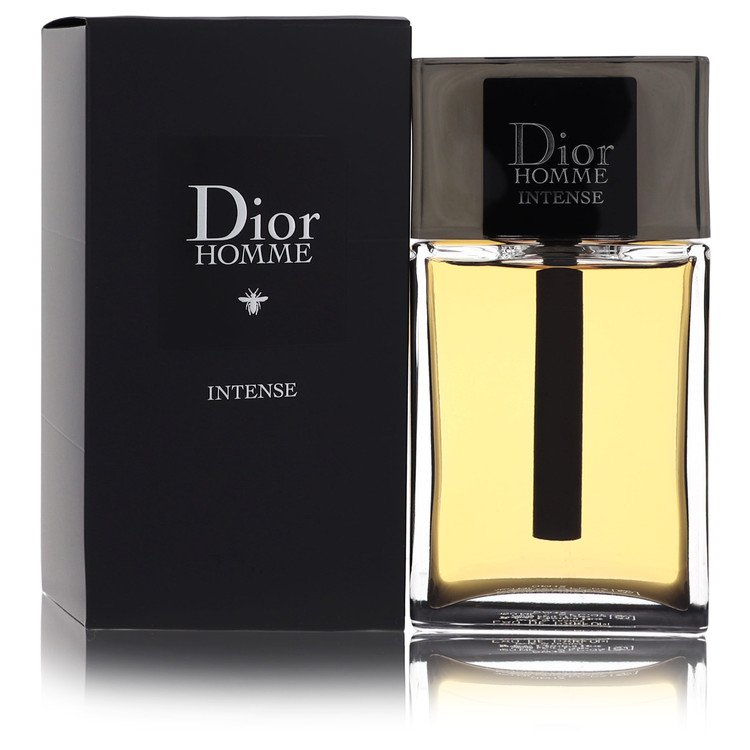
Dior Homme Intense
Dior · Eau de Parfum (EDP) · Woody
≈ $164 · 5oz
The honest summary
Iris earns its reputation as the connoisseur's expensive note honestly. Nothing about the process is exaggerated for marketing effect — three years in the ground, three more drying and aging before the irones even develop, then a low-yield distillation into a butter that costs more than gold by weight in the naturals trade. What you're smelling when a fragrance nails that cold, rooty, powder-compact facet isn't a flower at all. It's a root that took the better part of a decade to become worth wearing.