"Niche" and "designer" get treated as a verdict rather than a description — niche means serious and artisanal, designer means mass-market and disposable, or so the shorthand goes. Our catalogue holds 2,347 designer fragrances, 1,311 niche and 1,409 Middle Eastern, and the price data across them tells a messier story than either camp admits. There are $995 niche parfums and $995 has plenty of designer company. There are $14 fragrances built with real ambition. The label tells you something about how a house is organised and sold. It tells you almost nothing, on its own, about what's in the bottle.
What the words actually mean
"Designer" fragrance is, strictly, a licensing arrangement. A fashion or luxury house — Gucci, Missoni, Karl Lagerfeld — licenses its name to a beauty conglomerate (Coty, Puig, L'Oréal, Inter Parfums, or an in-house division like Estée Lauder's), which formulates, manufactures, markets and distributes the actual product, chasing volume through department stores and mall retailers worldwide. "Niche" originally meant the opposite: a small, usually independent house for which fragrance is the whole business, not a licensed accessory, sold through its own boutiques and specialist retailers to a narrower, more engaged customer. Serge Lutens, Editions de Parfums Frédéric Malle and Amouage all started this way — a perfumer or founder with a specific vision and no boardroom to answer to.
The line has gone blurry
That founder-led picture is increasingly a fiction. Jo Malone London and Le Labo are both owned by the Estée Lauder Companies. Maison Francis Kurkdjian is majority-owned by LVMH, the same conglomerate behind Dior and Givenchy's designer lines. Byredo took a majority investment from Puig, which also owns Carolina Herrera and Jean Paul Gaultier's designer businesses. These houses still market themselves as independent and artisanal, and the fragrances can still be genuinely distinctive — but the money, the distribution muscle and increasingly the retail real estate behind them is the same corporate machinery that runs the designer aisle. "Niche" today is as much a marketing register as a business structure.
What you're paying for: concentration and materials
Oil concentration is not a reliable dividing line either. Neesh, a genuinely small independent house, sells its entire range as parfum-strength extrait for $18 to $21 — some of the cheapest bottles in our whole catalogue, and stronger on paper than most eau de parfums twice the price. At the other end, Roja Parfums' Haute Luxe is also a parfum, and it runs $995. Concentration tells you how much fragrance oil is in the bottle, not how good or expensive that oil is. What genuinely varies by house, more than by category, is the grade and cost of the raw materials chosen and how much of them the formula actually uses — and that's set by budget and philosophy, not by the niche/designer label stamped on the box.

Mehr
Neesh Perfumes · Parfum / Extrait · Floral
≈ $18 · 50ml
What you're paying for: creative freedom vs the focus group
Where the categories do genuinely differ is process. A designer brief usually starts with a target demographic, a testing panel and a mandate for broad, inoffensive appeal — the fragrance has to work in a crowded department store spritz test and not alienate anyone. That process reliably produces competent, wearable, forgettable fragrances, and occasionally produces something excellent despite the constraints. A niche perfumer, at least in the founder-led model, can chase a specific idea without a panel voting it down — which is exactly how you get something as narrow and bracing as a wormwood-and-immortelle composition that would never survive a designer testing room, and also exactly how you get self-indulgent, undisciplined releases that never should have shipped.
Distribution, marketing and the bottle
Designer pricing is a scale game. A fragrance sold through thousands of department store counters worldwide, backed by a global ad campaign and a celebrity contract, spreads that overhead across millions of bottles — which is how Azzaro can sell a genuinely well-made 1970s-descended fougère as a $15 travel mini and still turn a profit. Niche houses sell far fewer bottles through far fewer doors, so the fixed costs of formulation, boutique-quality packaging and a smaller but more expensive marketing footprint land on a much smaller print run, pushing the per-bottle price up regardless of what's inside. None of that is really about the liquid. It's aisle real estate and unit economics.
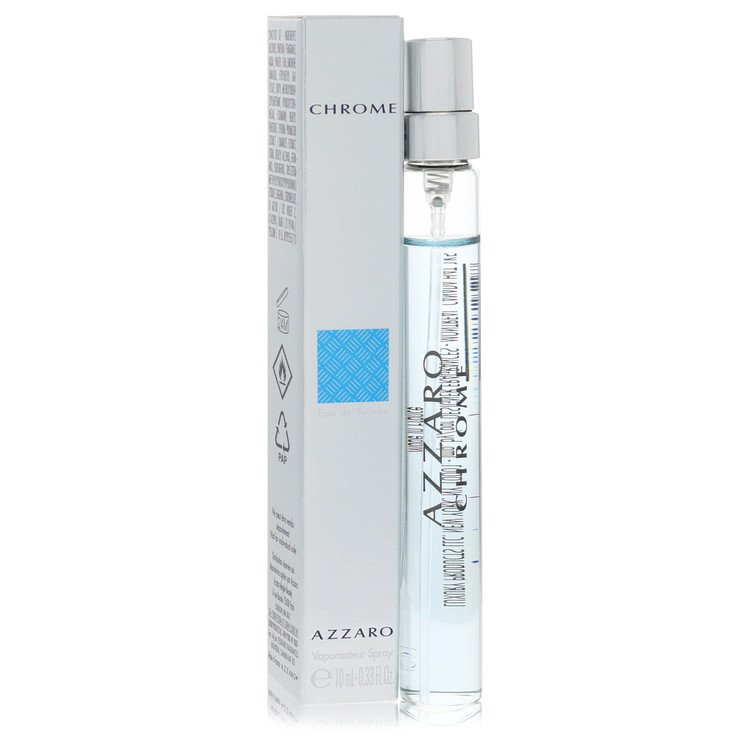
Chrome Mini
Azzaro · Eau de Toilette (EDT) · Fresh
≈ $15
It cuts the other way too: designer houses can spend just as extravagantly as any niche boutique when the release is positioned as a prestige flagship rather than a mass flanker. Bottega Veneta's 2024 Venice Collection retails at $450 a bottle — Chanel's original-strength No. 5 Parfum runs $360 for a single ounce — both comfortably above the median niche price in our catalogue. "Designer" doesn't mean cheap any more than "niche" means expensive; it just describes which distribution and licensing model a given release is running through, and both models have a luxury tier.
Alchemie
Bottega Veneta · Eau de Parfum (EDP) · Woody
≈ $450 · 100ml
The honest verdict
Niche is not automatically better. A meaningful share of the category is thin, over-designed and priced for the boutique shelf and the Instagram unboxing rather than for what's actually in the juice — simple accords in expensive-looking bottles, sold on scarcity and story rather than composition. Plenty of designer releases, meanwhile, are superbly made: disciplined, well-balanced, genuinely creative work that happens to carry a fashion house's name. What niche reliably buys you isn't quality — it's distinctiveness and lower ubiquity. You are much less likely to walk into a room and find three other people wearing the same $67 Montale oud than the same $24 Azzaro Chrome, and for some buyers that scarcity is worth paying for on its own terms. That's a legitimate reason to pay more. Better smell isn't.
What niche reliably buys you isn't quality — it's distinctiveness and lower ubiquity. Better smell isn't guaranteed by either label.
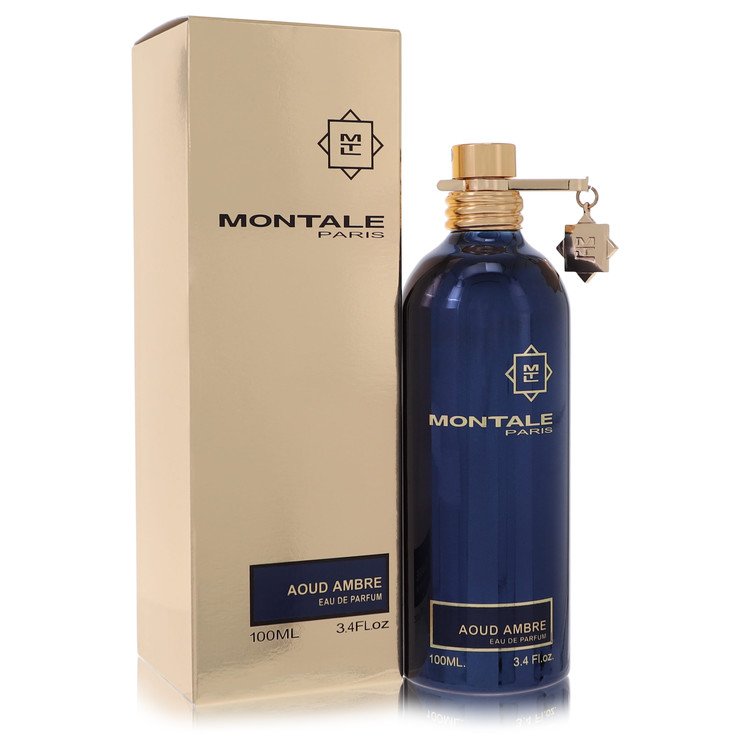
Aoud Ambre
Montale · Eau de Parfum (EDP) · Amber
≈ $67
Reformulation and IFRA hit everyone
Both categories have been reshaped by the same regulatory body. IFRA, the fragrance industry's self-governing standards group, has progressively restricted or banned dozens of classic materials over the decades — real oakmoss, certain musks, high doses of citrus furanocoumarins — on safety and allergen grounds, and every house selling into regulated markets has had to reformulate around the gaps. This is why a vintage bottle of a 1970s designer chypre and today's version can smell meaningfully different despite an unchanged name, and it's not a conspiracy about "cheapening the formula" — it's the same compliance pressure a small niche house faces when a beloved oakmoss-heavy base has to be rebuilt from scratch. Chanel's No. 5, still sold today in its full 1921 parfum strength, is one of the fragrances most discussed for this reason: the aldehyde-and-musk complex that defined it has been rebalanced more than once as raw materials were restricted, even as the house has worked hard to keep the character recognisable.
No. 5 Parfum
Chanel · Parfum / Extrait · Floral
≈ $360 · 30ml
The third category: Middle Eastern houses
Neither niche nor designer really describes the Middle Eastern fragrance industry, and treating it as a discount imitation of Western niche misses what's actually going on. Houses like Lattafa, Al Haramain and Ahmed Al Maghribi sell oud, saffron, amber and rose in the kind of dense, long-wearing concentrations Western niche houses charge a premium for — but through a completely different distribution and cost structure: local sourcing, minimal Western marketing spend, no department-store rent, and a home market that treats a rich oriental as an everyday fragrance rather than an occasion purchase. The result is real density at prices that would be unthinkable in a Paris boutique. Lattafa's Ana Abiyedh Leather is openly discussed online as a close, faithful take on Memo's much pricier Irish Leather, built on the same juniper-and-leather idea, and it costs $14.
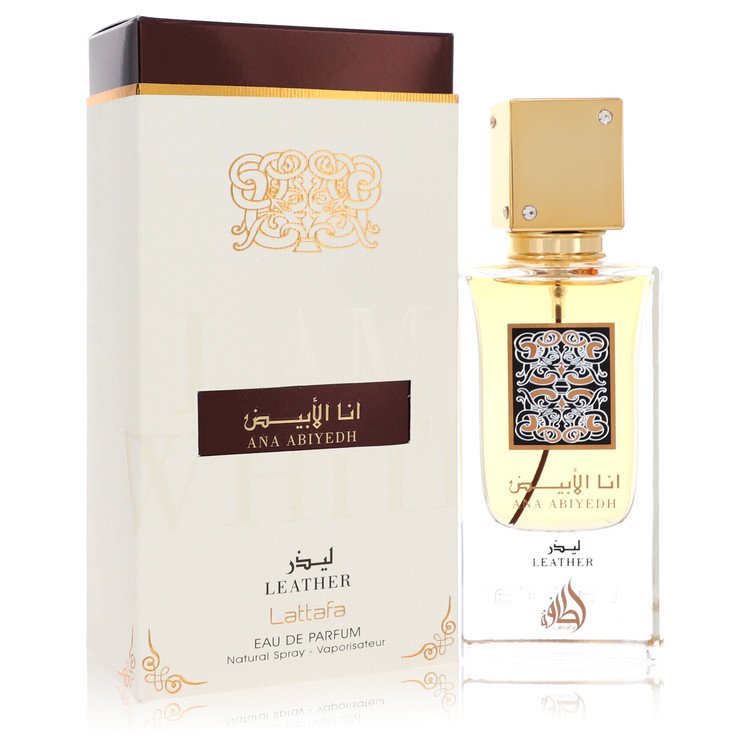
Ana Abiyedh Leather
Lattafa Perfumes · Eau de Parfum (EDP) · Woody
≈ $14
This isn't a fringe curiosity — at 1,409 records, our Middle Eastern catalogue is larger than the niche one. It ranges just as widely in ambition and price, from sub-$15 mass-market ouds to houses like Bharara pricing serious releases at $230, closer to designer-flagship territory. The honest comparison isn't "cheap Gulf clone vs expensive Western original"; it's a genuinely separate industry with its own scale economics, worth judging on what actually ends up on skin rather than on the assumption that low price means low ambition.
How to decide what to buy
Ignore the label and start from what you actually want. If you want a specific, unusual idea executed with real conviction and you're willing to pay for scarcity, niche is where that mostly lives — but sample first, because the boutique packaging and the price tag tell you nothing about whether the composition inside is actually interesting. If you want a well-made, reliable fragrance at an accessible price, designer's mass-market economics genuinely deliver that, especially among older formulas that have earned their reputation over decades rather than a single ad campaign. And if you want oud, amber or rose pushed to a density Western niche only offers at a steep premium, a well-reviewed Middle Eastern house will very often get you there for a fraction of the cost. None of the three labels is a shortcut to quality. All of them are worth trying before you decide.