Rose is the most common floral material in perfumery, and also the most misread. In the West it gets filed under "romantic," "feminine," a note for Valentine's Day gift sets and not much else. That reputation is a marketing accident of the last hundred years, not a fact about the flower. Rose appears in 1,374 fragrances in this catalogue — designer florals, yes, but also some of the darkest, smokiest, most unapologetically masculine compositions in Middle Eastern perfumery. No other single flower supports that range. Understanding why starts with admitting there isn't one rose — there are several, and they don't smell the same.
The two roses that actually matter
Almost everything sold as "rose" in a fragrance traces back to one of two species. Rosa damascena — damask rose — is grown chiefly in Bulgaria's Kazanlak valley (the famous "Valley of Roses"), in Turkey around Isparta, and in Iran. It smells rich, deep and honeyed, with a spicy, almost winey undertone that reads as full-bodied rather than dainty. Rosa centifolia — rose de mai, or May rose — is the Grasse variety, harvested for a few weeks each May around the Provençal town that built the modern perfume industry. It's softer and greener than damascena, with a jammy, honeyed-powdery character and less of the spice. Neither is "more real" than the other; they're simply different raw materials that happen to share a common name.
This site's note taxonomy treats them as genuinely separate ingredients rather than synonyms of a generic "rose," because perfumers do too. Damask rose, Turkish rose and rose de Taif are all catalogued as distinct notes from plain "rose," and fragrances built around a specific regional rose will often name it explicitly — Chloé's Atelier des Fleurs Rosa Damascena layers three separate rose notes (rose, damask rose and Taif rose) rather than reaching for one generic accord, precisely because each brings something the others don't.
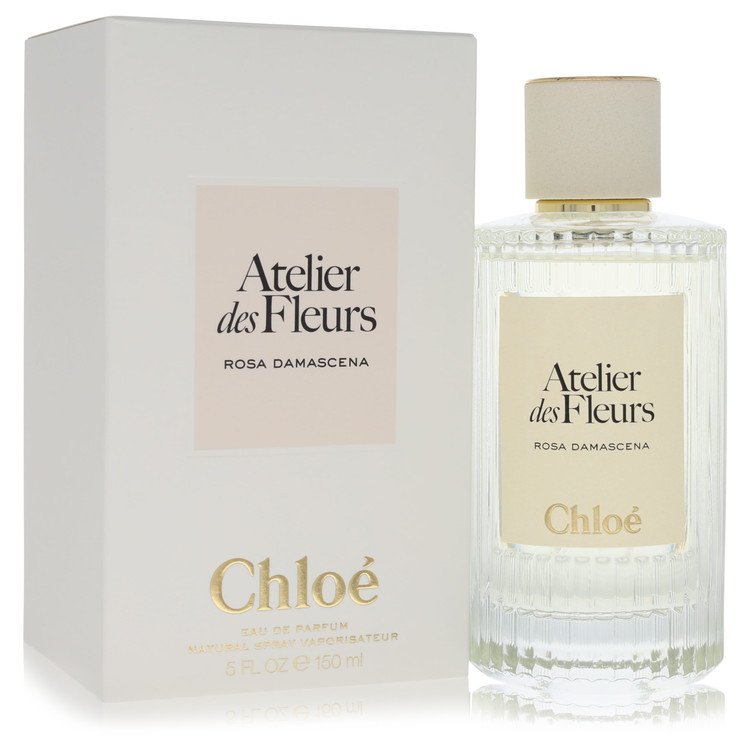
Chloe Atelier Des Fleurs Rosa Damascena
Chloé · Eau de Parfum (EDP) · Floral
≈ $170
Why rose oil is so expensive to make
Rose is a genuinely difficult crop. Pickers work before dawn, often finishing by mid-morning, because the flower's essential oil begins volatilising as soon as the sun warms the petals — pick too late in the day and you lose yield. The ratio of flower to oil is famously bad: figures commonly cited run to several tonnes of hand-picked petals for a single kilogram of rose otto, which is part of why natural rose remains one of perfumery's costlier raw materials even before you factor in labour. A lot of "rose" in cheaper fragrances is therefore not rose oil at all, but a synthetic reconstruction built from geraniol, citronellol, phenylethyl alcohol and rose oxide — close enough to convince most noses, at a fraction of the cost.
There are also two genuinely different rose materials extracted from the same flower, and fragrances rarely tell you which one they used. Rose otto is steam-distilled, which yields a clean, sharp, slightly green material — this is the classic "Bulgarian rose oil" sold in aromatherapy. Rose absolute is solvent-extracted, producing a thicker, deeper, more honeyed material with a waxy, almost animalic undertone that otto doesn't have. A perfumer choosing between them is making a real creative decision, not a cost one — the two smell different enough that swapping one for the other changes a composition's whole character.
Taif rose: the Gulf's rarest rose
The rose grown at altitude around the Saudi city of Taif is its own category entirely. Rose de Taif is harvested from terraced mountain farms above roughly 1,500 metres, where the cooler climate concentrates the oil into something deeper, spicier and more intensely rosy than lowland damascena — it's routinely cited as among the most expensive rose materials anywhere, prized by both the international fine-fragrance industry and, closer to home, by the Gulf's own perfume houses, who treat it as a genuine point of national pride rather than an imported luxury. Afnan's Riwayat El Ta'if pairs it with Bulgarian rose and oud in exactly the register it's built for — a lush, sensuous oriental rather than a soliflore.
Rose is not a feminine note
This is the point worth actually sitting with. Western marketing spent the twentieth century pushing rose into pink bottles and bridal-shower gift sets, and it worked well enough that most people now assume the association is inherent to the flower. It isn't. In the Middle East, rose has been a foundational masculine material for centuries, usually built around one of two pairings — rose and oud, or rose and saffron — and it remains completely normal for a men's fragrance there to lead with rose the way a Western men's fragrance leads with bergamot or vetiver. The catalogue backs this up directly: 181 of the fragrances carrying a rose note are classified masculine, spanning everything from budget attars to four-figure niche releases.
Amouage's Lyric Man is the cleanest proof of the point at the top end — a 2008 Daniel Visentin composition built by a house that has never treated rose as a womenswear ingredient, layering rose with saffron, ginger and frankincense into something dense, spicy and unmistakably masculine. It's frequently cited as one of the fragrances that reintroduced Western niche perfumery to the idea that rose could anchor a men's scent rather than just decorate one.

Lyric Man
Amouage · Eau de Parfum (EDP) · Woody
≈ $360 · 100ml
It isn't only a niche phenomenon. Afnan's Rare Carbon does the same pairing — rose and oud over leather and cedar — for $20, aimed squarely at a masculine market that has never needed convincing rose belongs there. The gendering of rose as "for women" is a relatively recent, largely Western commercial convention. Half the world's rose perfumery never bought into it.
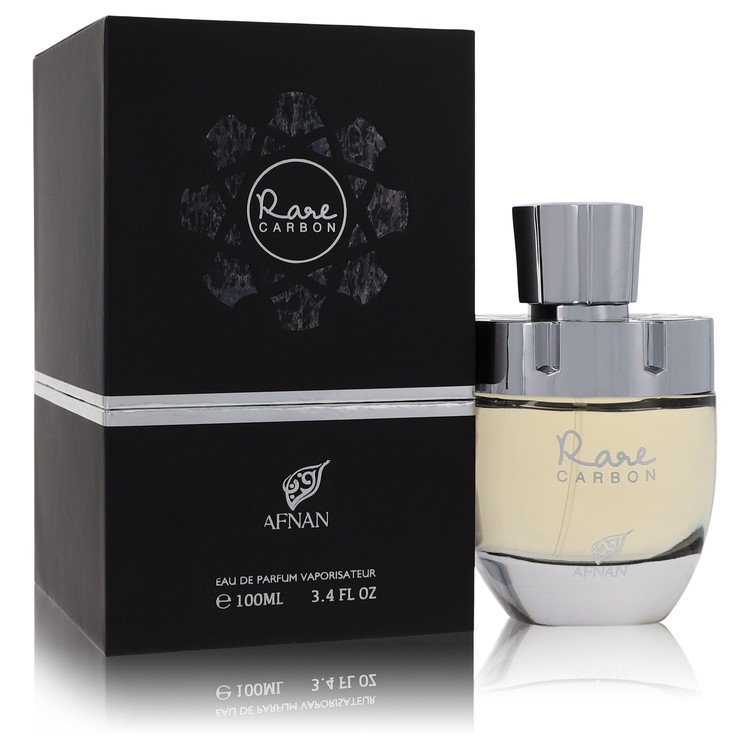
Rare Carbon
Afnan · Eau de Parfum (EDP) · Woody
≈ $20 · 3.4oz
In the Gulf, rose and oud is as normal a men's pairing as bergamot and vetiver is in the West. The gendering of rose is a marketing story, not a fact about the flower.
The classic pairings
Rose-oud is the defining Middle Eastern pairing, and one of perfumery's most enduring for a good reason: rose's sweetness civilises oud's raw, barnyard-animalic edge, while oud gives rose weight and lasting power it doesn't have alone. Al Haramain's Rose Oud is a straightforward, inexpensive way to meet the combination — damask rose and saffron over a leathery, mossy base, sitting close to how the pairing is worn day-to-day across the region rather than how a niche house stylises it.
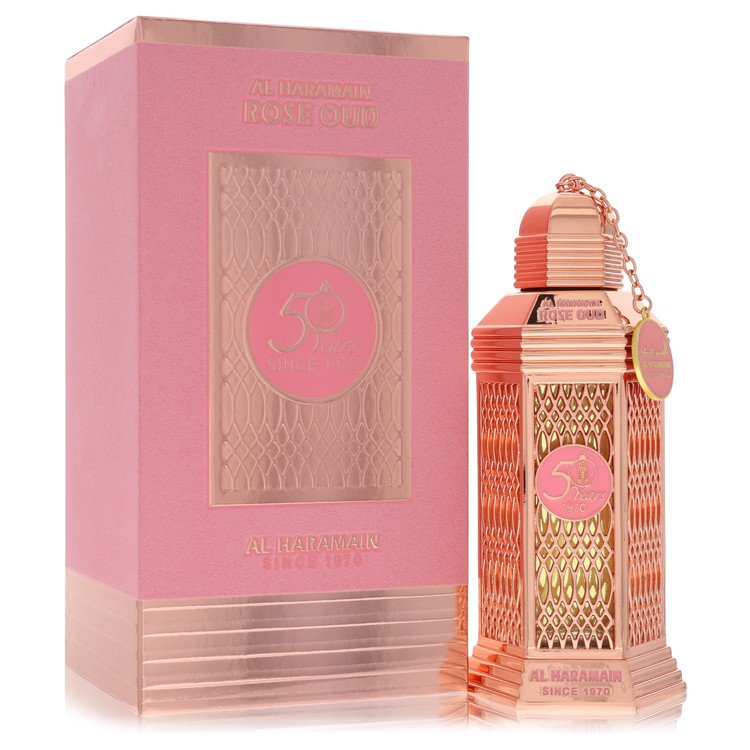
Rose Oud
Al Haramain · Eau de Parfum (EDP) · Woody
≈ $48
Rose-saffron is oud's quieter cousin — spicier and more immediately radiant, since saffron's leathery-metallic sharpness plays off rose's sweetness even without agarwood in the base. Rose-patchouli is the modern chypre's answer to the same problem: patchouli's earthy, slightly bitter darkness does for rose what oud does, just with a mossier, more Western vocabulary. Frédéric Malle's Portrait of a Lady is the reference point — Dominique Ropion's 2010 composition drenches Turkish rose in patchouli, incense and spice at a volume few fragrances attempt, and it's become the niche era's definitive statement on what rose can do when it isn't asked to be delicate.
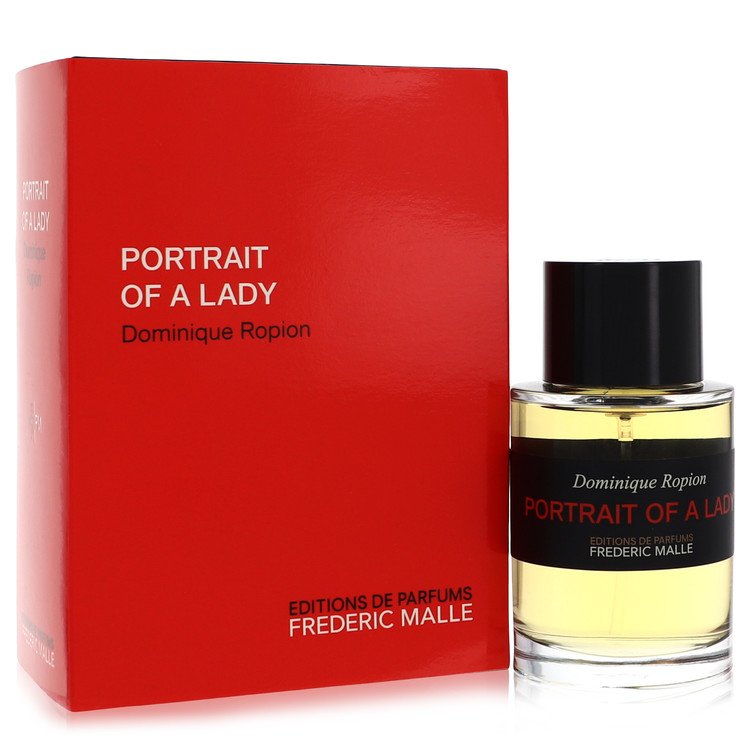
Portrait of a Lady
Frédéric Malle · Eau de Parfum (EDP) · Floral
≈ $380 · 3.4oz
Rose-fruit is the lighter, more contemporary pairing — raspberry, blackcurrant, lychee or peach brightening rose's honeyed weight into something more casual. Byredo's Rose of No Man's Land takes a more restrained version of this: damask rose and raspberry blossom over pink pepper and dry papyrus, kept unisex and deliberately understated rather than pushed into fruity-floral sweetness. At the more accessible end, Armaf's Eter Desert Rose does a similar rose-saffron-fruit build — passionfruit and damask rose over patchouli, leather and amber — for a fraction of the price, proving the pairing doesn't require a niche budget to work.
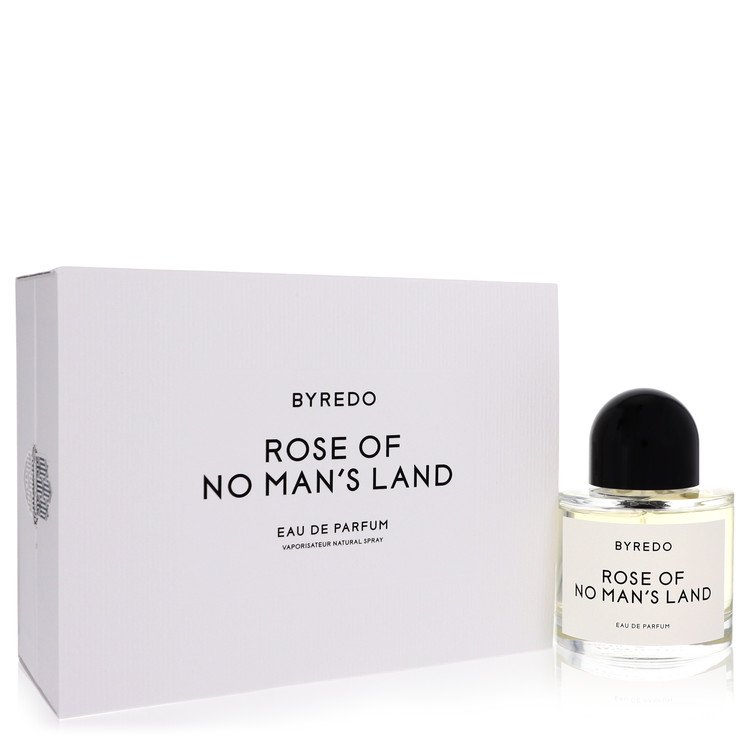
Rose of No Man's Land
Byredo · Eau de Parfum (EDP) · Floral
≈ $220 · 3.3oz
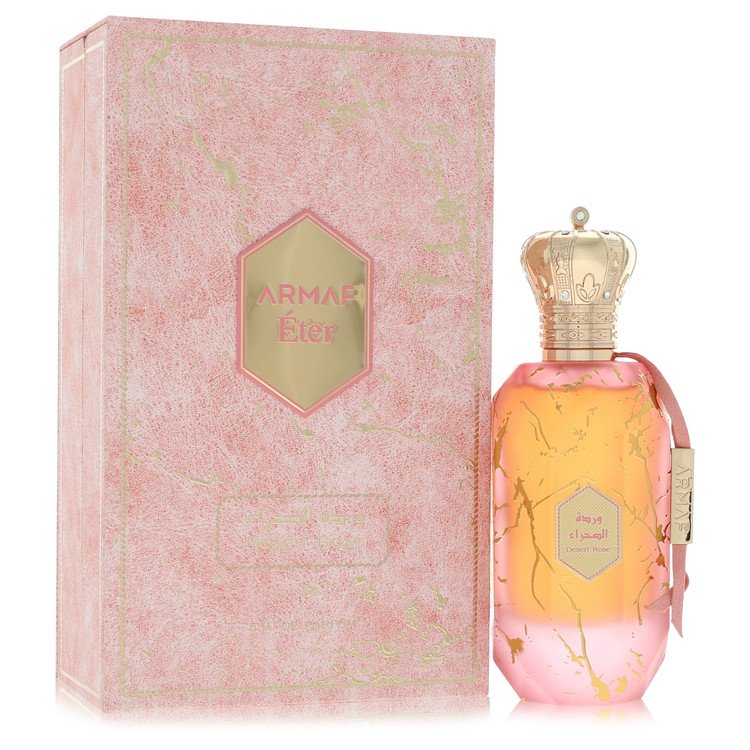
Eter Desert Rose
Armaf · Eau de Parfum (EDP) · Amber
≈ $31
How to actually taste the difference
If you only know rose from one or two mainstream florals, the range above is genuinely worth exploring in order rather than at random. Start with something built openly around a specific regional rose rather than a generic accord — Chloé's triple-rose composition is a good, relatively affordable way to hear damascena and Taif rose side by side. Then try a Western-style pairing at the extreme end, like Portrait of a Lady, to hear how far patchouli can push rose into something dark and heavy. Only then cross into the Middle Eastern tradition — Al Haramain's Rose Oud for the accessible version of rose-and-oud, Amouage's Lyric Man for what a serious masculine rose composition actually sounds like when a house has never treated the flower as gendered. By the end, "rose" stops being a single note and starts being a whole vocabulary.
The honest summary: rose is not simple, not inherently feminine, and not one material. It's a family of genuinely different raw materials — damask, centifolia, Taif, otto, absolute — each suited to a different job, used by masculine and feminine perfumery alike across very different traditions. Nothing else in the perfumer's palette does quite so much work in quite so many directions.