Vanilla is the note nobody thinks about because everybody thinks they already know it. It's in 1,822 fragrances in this catalogue — more than any note except musk and bergamot — and it's routinely dismissed as the safe, beginner, dessert-aisle option. That reputation is mostly earned by how vanilla gets marketed, not by what it does in a formula. The real material is one of the most labour-intensive crops on earth, the synthetic version is a genuine perfumery achievement rather than a cheap shortcut, and the note itself is stranger and more varied than "sweet" suggests.
An orchid that needs a human matchmaker
Vanilla comes from the cured seed pod of a climbing orchid, Vanilla planifolia, and almost nothing about producing it is straightforward. The plant is native to Mexico, where a specific local bee, Melipona, pollinates it naturally. Everywhere else vanilla is grown commercially — above all Madagascar and the nearby island of Réunion, which between them supply most of the world's crop — that bee doesn't exist. Every flower has to be hand-pollinated, one at a time, by a person with a thin stick, within the few hours a day the bloom is open before it closes for good. That's not a niche artisanal detail; it's the entire industry, and it's exactly the kind of unglamorous, high-labour step that never makes it into a bottle's marketing copy.
Pollination is only the start. The green pods take about nine months to mature, and once picked they have no smell at all — the vanillin and the hundreds of other aroma compounds that give cured vanilla its character only develop through months of blanching, sweating, sun-drying and conditioning. A grower can be a year and a half into a crop before it's sellable. Combine that labour intensity with a supply chain concentrated in one climate-vulnerable region, and you get a commodity whose price has swung wildly over the past two decades — cyclone damage or a bad harvest in Madagascar can send raw bean prices spiking to several hundred dollars a kilogram in a single season, occasionally rivalling silver by weight. Vanilla is, by most measures, the second most expensive spice in the world after saffron.
Why almost none of it is real vanilla
Given that price and volatility, it's no surprise that the overwhelming majority of vanilla used in perfumery — and in food, for that matter — is synthetic vanillin or its close cousin ethylvanillin, not extract from actual cured beans. This gets framed as a downgrade, but it's worth being honest about why perfumers reach for it anyway. Natural vanilla absolute is a genuinely beautiful material — deep, boozy, resinous, more complex than pure vanillin because it carries hundreds of trace compounds alongside it — but it's also expensive, batch-variable, and can behave unpredictably, sometimes darkening or shifting over time. Synthetic vanillin is stable, consistent, cheap enough to use generously, and — since ethylvanillin in particular reads as roughly three times stronger and sweeter than natural vanillin — lets perfumers dial in exactly the intensity they want. A well-made vanillin base isn't a cheat; it's closer to how a synthetic musk lets a perfumer build a clean, reliable effect a natural material can't guarantee bottle to bottle. The fragrances that do lean on real vanilla absolute, like Guerlain's Spiritueuse Double Vanille or Van Cleef & Arpels' Orchidée Vanille, tend to say so, and charge accordingly.
Vanilla is not one smell
This is the part most casual descriptions skip past, and it's the single most useful thing to understand about the note: vanilla doesn't have a fixed personality. It's a chameleon that takes on the character of whatever it's paired with — warm, sweet and creamy at its core, but with balsamic, boozy and powdery facets that different formulas push in very different directions. Pair it with rum, tobacco and dried fruit and it turns dark and boozy. Pair it with incense and resin and it turns smoky, almost liturgical. Pair it with leather and oakwood and it turns dry and animalic rather than sweet. Pair it with almond and iris and it turns dusty and powdery, closer to old-fashioned face powder than dessert. Pair it with whipped cream and white musk and it turns genuinely creamy and skin-like. The mistake beginners make is assuming "vanilla fragrance" means one thing; in practice it's a base note that amplifies whatever's built around it.
L'Artisan Parfumeur's Vanille Absolument, created by Bertrand Duchaufour and originally launched as Havana Vanille, is a clean demonstration of the boozy-smoky end of that range. It opens on vanilla, dried fruit and clove, but the heart brings in tonka bean, immortelle and licorice before the base settles into rum, tobacco, resin and leather — evoking a Cuban cigar lounge far more than a bakery. Nothing about it reads as dessert.
Vanille Absolument
L'Artisan Parfumeur · Eau de Parfum (EDP) · Amber
≈ $175 · 100ml
At the other end sits Van Cleef & Arpels' Orchidée Vanille, from the house's Collection Extraordinaire. It builds its vanilla-absolute base around bitter almond and Bulgarian rose rather than sugar, which is what gives it that dusty, grown-up, powdery quality — closer to fine face powder than icing. Perfumer Randa Hammami keeps the composition airy on purpose, so the vanilla reads as refined rather than cloying.
Orchidée Vanille
Van Cleef & Arpels · Eau de Parfum (EDP) · Amber
BDK Parfums' Vanille Leather, from perfumer Dominique Ropion, shows the dry, structural side of the note. Madagascar vanilla sits in the base alongside real leather, iris, oak and patchouli, and the effect is warm rather than sweet — the vanilla rounds off the leather's smokiness rather than competing with it.
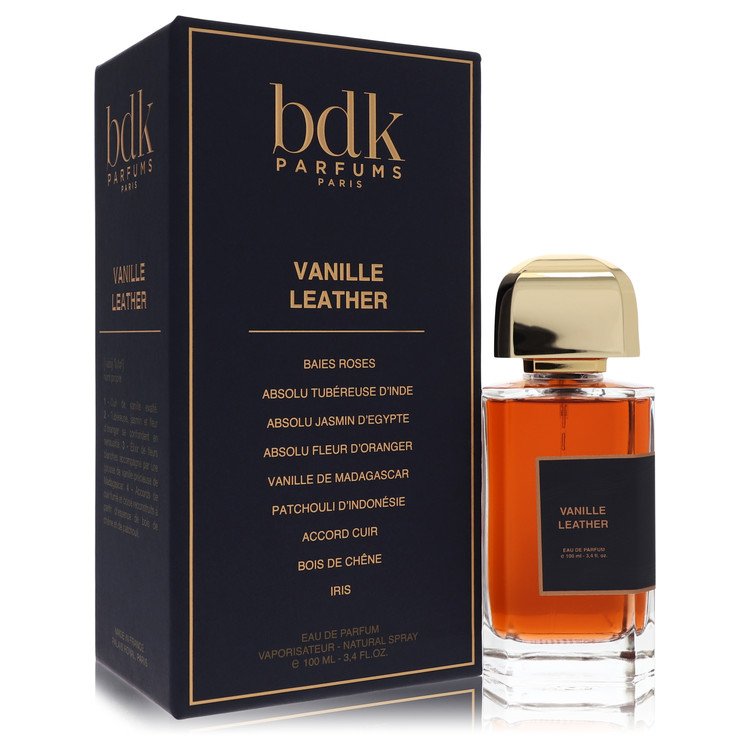
Bdk Vanille Leather
BDK Parfums · Eau de Parfum (EDP) · Amber
≈ $239
Angel and the invention of modern gourmand
None of vanilla's range would have mattered commercially without the fragrance that made edible-smelling perfume mainstream in the first place. Before 1992, "food you can wear" was not a serious category in Western perfumery — sweetness existed, but it lived inside florals and orientals, not as the headline. Thierry Mugler's Angel changed that overnight. Built by Olivier Cresp and Yves de Chiris around an almost unheard-of pairing of patchouli with caramel, chocolate and vanilla, on top of cotton candy, coconut and blackcurrant, it was polarising precisely because it smelled like dessert rather than a flower garden. It became one of the best-selling women's fragrances in the world and effectively created the gourmand genre as we now understand it — every candy-floss, chocolate-noted, praline-based fragrance since owes it a direct debt. Vanilla is the load-bearing note underneath all of that: it's what lets the caramel and chocolate accords sit convincingly on skin instead of smelling like a food additive.
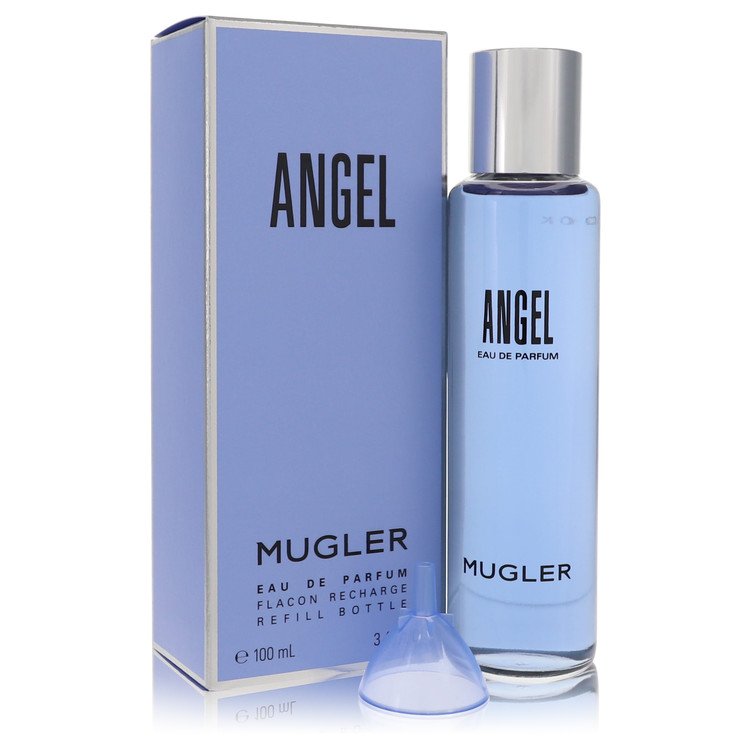
Angel
Mugler · Eau de Parfum (EDP) · Amber
≈ $81 · 3.4oz
Creamy versus bakery-sweet
Within the gourmand family itself there's a further split worth naming, because the two effects read very differently on skin. Mancera's Vanille Exclusive is the creamy version: osmanthus and white peach open into a whipped-cream accord, tuberose and jasmine bloom in the heart, and everything settles into vanilla and white musk — soft, rounded and lotion-like, closer to body cream than a dessert plate. Lattafa's Pride Brioche Vanille goes fully bakery instead — brioche and bergamot up top, heliotrope and balsam fir in the heart, praline and benzoin in the base. It genuinely smells like warm pastry, at a price that makes trying the whole gourmand idea close to risk-free.
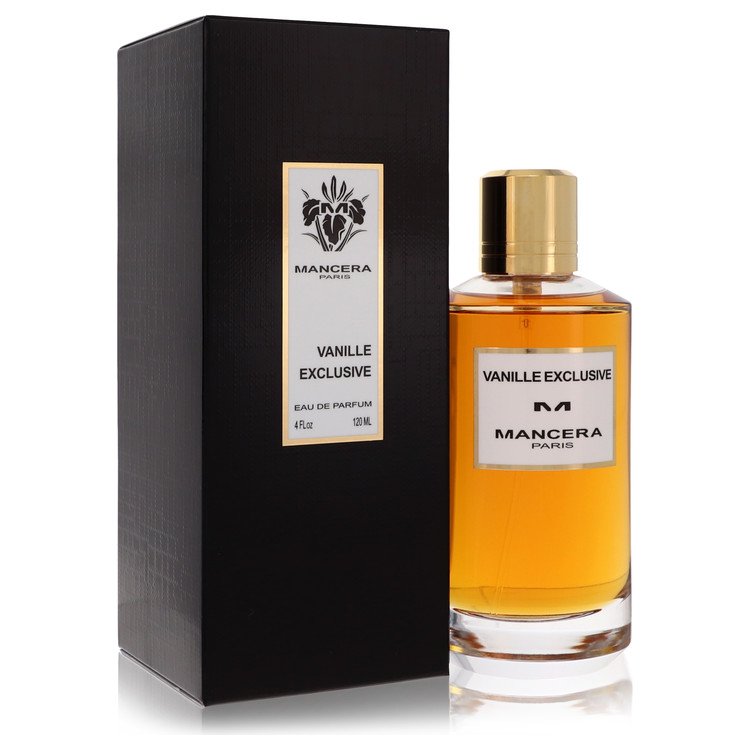
Vanille Exclusive
Mancera · Eau de Parfum (EDP) · Amber
≈ $100
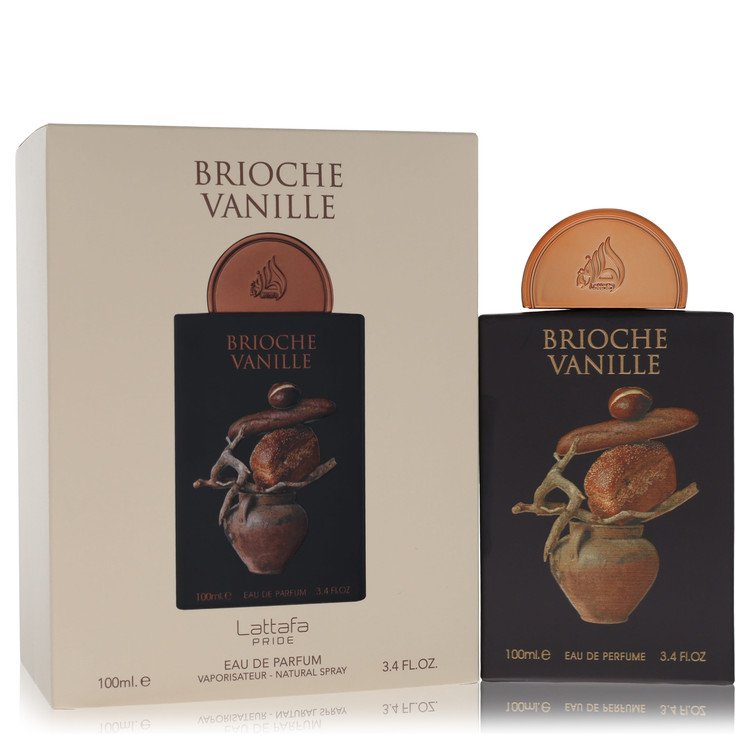
Lattafa Pride Brioche Vanille
Lattafa Perfumes · Eau de Parfum (EDP) · Amber
≈ $20
A spiced, affordable everyday vanilla
Vanilla doesn't need a niche budget to work, and it's just as often a supporting warmth as a headline act. Afnan's 9pm is the clearest evidence of both: it's become one of the best-known affordable fragrances in the Middle Eastern-house category precisely because it's built around vanilla without smelling like a dessert. Cinnamon and apple open it, lavender and orange blossom sit in the heart, and it dries down into a vanilla-tonka-amber base that gives lasting warmth without the sugar overload. It's a good demonstration that vanilla's real job in most formulas is textural — it rounds off sharp or spicy top notes rather than announcing itself.
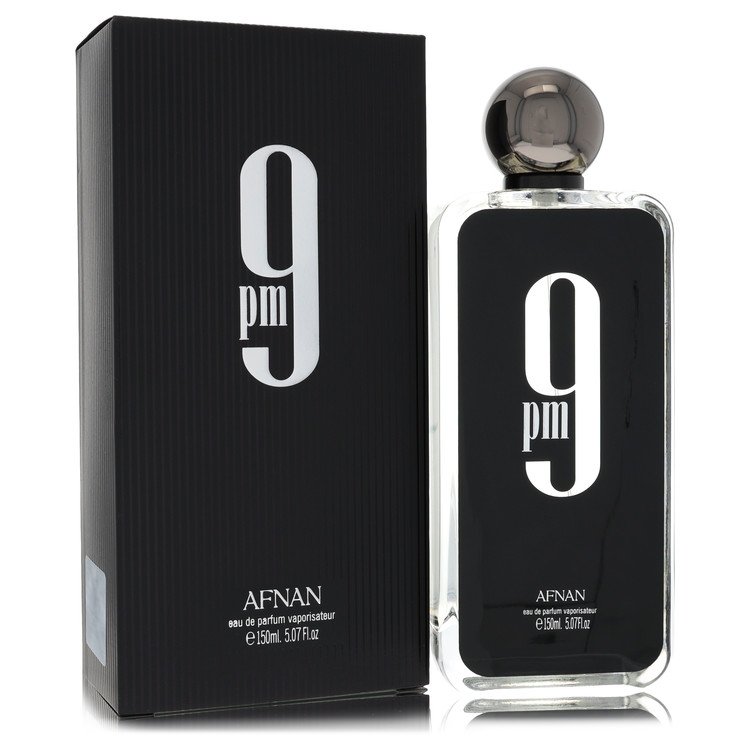
9pm
Afnan · Eau de Parfum (EDP) · Amber
≈ $48
The luxury end
Guerlain's Spiritueuse Double Vanille sits at the other end of the price ladder for a reason: it's one of the few widely available fragrances built around real vanilla absolute rather than a synthetic base, and Jean-Paul Guerlain layered two separate vanilla extractions into it for extra depth. Incense and pink pepper open it, cedar, ylang-ylang, rose and jasmine fill the heart, and the base is vanilla and benzoin doing genuinely dense, boozy, resinous work rather than simple sweetness. It's the fragrance to smell if you want to understand what "double vanille" buys you over a synthetic-led composition — richer, rounder, less linear, and considerably more expensive to make.
Spiritueuse Double Vanille
Guerlain · Eau de Parfum (EDP) · Amber
≈ $270 · 125ml
Why it reads as comfort, and when it goes wrong
There's a reasonably well-supported idea, floated by fragrance researchers and repeated often enough in the industry to be worth taking seriously, that vanilla's association with warm milk and early feeding gives it an outsized emotional pull — it reads as safe and comforting in a way few other notes manage, which is part of why it turns up in so many bestsellers across totally different genres, from gourmands to fresh florals to woody orientals. That's a real strength. It's also the source of vanilla's biggest weakness: overdone, with too little structure holding it up, a heavy vanilla can tip from comforting into cloying or juvenile-reading fast, especially in cheaper formulas that lean on vanillin alone with nothing else to give it edge. The fragrances worth paying attention to, at any price point, are the ones that give vanilla something to push against — leather, tobacco, incense, bitter almond, real spice — rather than the ones that just pile more sugar on top. That contrast, not the sweetness itself, is what separates a genuinely good vanilla from a forgettable one.