Spend an afternoon testing fragrances at a department store counter and a strange thing happens: a lot of them start smelling related. Not identical, but built from the same family of ingredients — a dry, warm, faintly sweet, almost mineral base note that shows up under citrus openings, under spicy florals, under woody colognes marketed to men and women alike. That note has a name. It's ambroxan, and understanding it explains more about modern perfumery than almost any other single fact.
It starts with a whale
Ambroxan exists because of ambergris, one of the strangest materials ever used in perfumery. Ambergris is a waxy substance produced in the digestive tract of sperm whales, thought to help them pass the indigestible beaks of squid. Occasionally a lump is expelled or the whale dies and it's recovered — historically most ambergris was found washed up on beaches or floating at sea, aged for years by salt water and sun into something perfumers prized: a warm, animalic, faintly marine, almost radiant scent that also had a rare technical property, holding other fragrance materials on the skin far longer than they'd last alone.
Real ambergris was never something you could build an industry on. It's found, not farmed — nobody has ever commercially harvested it from a living whale — and supply has always been a matter of luck and beachcombing. Sperm whales have been protected under international whaling bans since the 1980s, and ambergris trade is now restricted or outright illegal in a number of countries, the US included, because it's a whale product regardless of how it was obtained. What little genuine ambergris still circulates legally is astronomically expensive and reserved for a handful of ultra-niche houses. For the other 99% of the industry, the ambergris era ended decades ago.
The synthetic that replaced it
Chemists spent much of the 20th century trying to reproduce ambergris's effect without the whale, and largely succeeded. Ambrox — the molecule, first synthesised at Firmenich in the 1950s from sclareol, a compound found in clary sage — reproduces the dry, warm, ambery-woody facet of aged ambergris closely enough that most noses can't tell the difference in a blind smell. Ambroxan followed as a related synthesis, and today the same basic molecule is sold under a dozen trade names — Cetalox, Ambrofix, Amber Xtreme — by different fragrance houses, each with slightly different purity, strength and price point.
The appeal was never just that it smelled similar. It's consistent batch to batch, which a whale-derived material never can be. It's plant-derived, which sidesteps both the ethics and the legal grey area of whale products. And it's cheap to produce at scale, which real ambergris, even where legal, structurally cannot be. Once a lab can make a material that does 90% of what the rare, expensive, ethically fraught original did — for a fraction of the cost — the outcome across an entire industry is not really in question.
What it actually smells like
On its own, ambroxan is oddly abstract. It isn't sweet like vanilla or sharp like citrus — it reads as dry, warm, faintly salty, almost like clean skin or sun-warmed driftwood, with a mineral quality that's hard to pin down because it doesn't resemble anything you'd encounter outside a perfume. The most direct way to smell it is Molecule 01, built from nothing else.

Molecule 01
Escentric Molecules · Eau de Toilette (EDT) · Woody
≈ $170 · 100ml
But the trait that made ambroxan indispensable isn't really its own smell — it's what it does to everything around it. It's a powerful fixative and diffuser: it makes other materials in a formula project further, last longer, and feel more "radiant" on skin. Add a whisper of it to a rose, a patchouli, a vetiver, and the whole composition gets a lift and a longevity boost that's genuinely hard to achieve any other way. That amplifying property, more than the smell itself, is why perfumers reach for it constantly.
A small cast of molecules, everywhere
Ambroxan didn't take over alone. It sits alongside a small group of other powerful modern synthetics that show up in a similar role: Iso E Super, a velvety cedar-like molecule from IFF so versatile it became the entire formula of a cult fragrance; Cashmeran, a musky, warm "cashmere wood" note that adds softness and sweetness to woody bases; and a family of trademarked "captive" woods developed by the big fragrance houses specifically to be smoother, cheaper and more consistent than natural sandalwood or agarwood. Individually distinctive, together they form a recognisable modern accord — dry, ambery, clean, radiant — that a trained nose can pick out across hundreds of different brands.
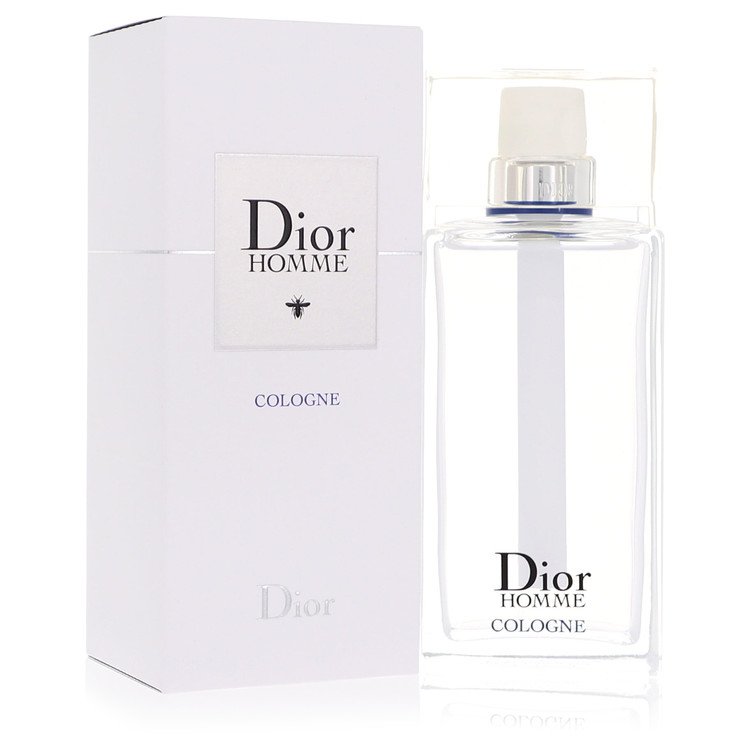
Homme
Dior · Eau de Parfum (EDP) · Woody
≈ $133
Why the mainstream converged on one accord
The post-2010 designer landscape — the wall of "blue" bottles, the fresh-spicy masculines, the unisex woody-ambers that dominate every airport duty-free — leans on this same small toolkit for reasons that have very little to do with creativity and everything to do with how fragrance actually gets sold. A bottle has roughly two seconds to make an impression on a store spray card, and materials like ambroxan and Iso E Super are loud, radiant and immediately pleasant in a way that rewards that format. They're also cheap relative to naturals, stable in sunlight and heat (naturals like oakmoss and many musks are heavily restricted by IFRA, the industry's safety body, for allergy and phototoxicity reasons), and forgiving to work with. A brand chasing broad, inoffensive appeal at a competitive price point will, correctly, keep landing on the same handful of molecules.
Ambroxan isn't cheating. It's what happens when an industry finds a material that's better, safer and ten times more affordable than the thing it replaced — and then everyone, understandably, reaches for it at once.
Nowhere is this clearer than in the sub-$50 market, where a small number of ambroxan-heavy accords get reinterpreted constantly. Armaf's Club de Nuit Untold is a good example — an inexpensive, saffron-and-ambery-wood composition explicitly built to echo the far pricier Baccarat Rouge 540 school of fragrance, and it sells enormously well precisely because that dry, radiant amber reads as expensive at any price point.
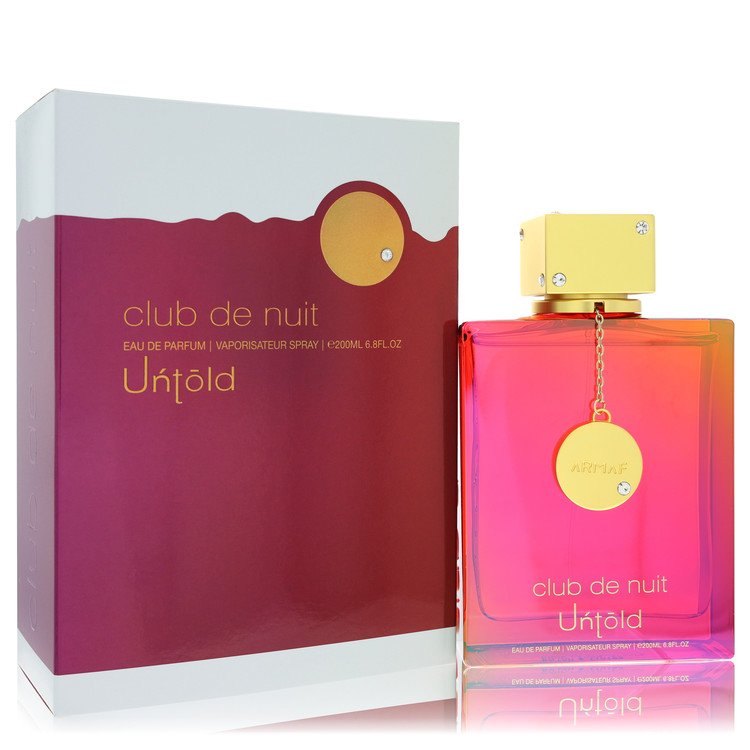
Club de Nuit Untold
Armaf · Eau de Parfum (EDP) · Amber
≈ $76 · 6.8oz
It isn't only the budget end, either. Niche perfumery, which markets itself on being different from the mainstream, leans on the exact same materials — often more heavily, since niche formulas tend to foreground fewer ingredients rather than more. Le Labo's Santal 33 is one of the most imitated fragrances of the last fifteen years, a cardamom-and-violet opening over a cedar-and-ambrox base that became so ubiquitous in certain cities it earned a reputation as the unofficial scent of gentrification. The material is the same one in the $20 dupes; the packaging and price are what signal "niche."
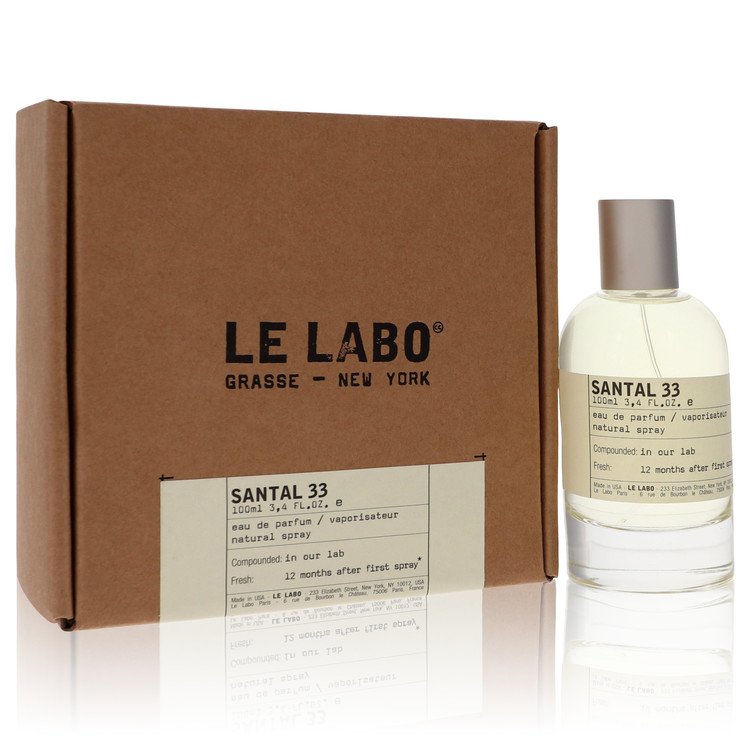
Santal 33
Le Labo · Eau de Parfum (EDP) · Woody
≈ $330 · 3.4oz
In defence of the synthetics
It would be lazy to end this as a takedown, because the honest picture is more complicated. Ambroxan and its relatives are not a lesser, dumbed-down substitute forced on the industry by accountants — they're genuinely excellent materials that let perfumers do things natural ambergris never allowed at any price: consistent batches, safer formulas, ingredients that don't rely on a dead whale washing ashore. Reviving large-scale ambergris use isn't a realistic or desirable alternative on ethical or supply grounds, full stop. Plenty of loved, well-regarded fragrances — including several in this piece — are built on these molecules and are better for it. The problem was never the ingredient. It's what happens when hundreds of brands, chasing the same spray-test moment, reach for it in roughly the same proportions.
Finding something that smells like nothing else
If the ambroxan accord has started to feel like wallpaper, the fix isn't avoiding synthetics — it's looking for formulas built around a different structural idea entirely. The chypre family, built on oakmoss, is the classic example: Guerlain's Mitsouko, from 1919, is the archetype, a fruity peach-and-oakmoss composition with an earthy, almost damp quality that shares nothing with a modern woody-amber.

Mitsouko
Guerlain · Eau de Parfum (EDP) · Woody
≈ $110 · 2.5oz
Animalic and leather compositions are another route out — real civet-adjacent, skin-warm bases that read as far more human and less polished than a clean ambroxan drydown. Balmain's Jolie Madame, Germaine Cellier's 1953 leather chypre, is the reference point: violet and leather over a genuinely animalic base, built decades before ambroxan was ever a factor in mainstream perfumery.
Jolie Madame
Balmain · Eau de Toilette (EDT) · Woody
≈ $75 · 50ml
The broader lesson holds beyond these two: read past the marketing copy and look at the actual note pyramid. A formula anchored on oakmoss, patchouli, real leather accords or heavy aldehydes is chasing a different effect than one anchored on ambroxan and cedar synthetics, even when both get called "woody" on a shelf tag. Neither approach is more legitimate than the other — but if what you're after is something that doesn't smell like everything else on the counter, that's where to start looking.